
 Halloween W'sheets!


An ice cube melts in a glass. A bicycle chain turns rusty. Both look different afterward, but have they changed in the same way?
Learning about physical and chemical changes helps children explain what happens to everyday materials. The key question is: Did a new substance form?
What is a physical change?
A physical change changes a material’s size, shape or state without making a new substance.
When you tear paper, you get smaller pieces of paper. When ice melts, solid water becomes liquid water. The material looks different, but it is still the same substance.
Examples of physical changes include:
• Cutting paper into strips.
• Crushing an empty aluminum can.
• Melting an ice cube.
• Freezing water into ice.
• Dissolving sugar in water.
In the last example, the sugar seems to disappear, but it is still present in the water. Dissolving sugar does not create a new substance.
What is a chemical change?
A chemical change happens when one or more new substances form. Another name for this process is a chemical reaction.
For example, when iron reacts with oxygen and moisture, rust forms. Rust is a different substance from the iron that was there before.
Examples of chemical changes include:
• An iron nail rusting.
• Bread turning brown as it toasts.
• An apple slice browning after it is cut.
• Baking soda reacting with vinegar.
Chemical changes can happen quickly, such as the fizzing when baking soda meets vinegar, or slowly, such as rust forming on a bicycle.
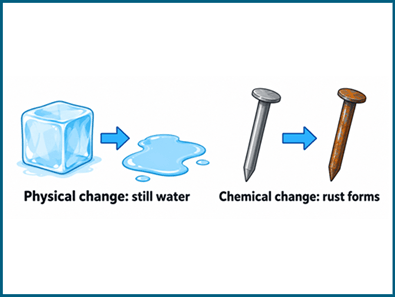
Physical vs. chemical changes: work through the examples
Help your child describe what changed and explain whether a new substance formed.
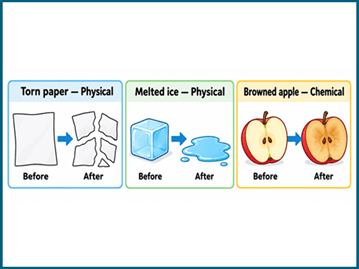
Example 1: Tearing paper
Before: One sheet of paper.
After: Several small pieces of paper.
What changed? The size and shape.
Did a new substance form? No. The pieces are still paper.
Answer: Physical change.
Example 2: Melting ice
Before: Solid water.
After: Liquid water.
What changed? The state of matter.
Did a new substance form? No. Both the ice and the liquid are water.
Answer: Physical change.
Example 3: A cut apple turning brown
Before: A freshly cut apple with pale flesh.
After: The exposed surface becomes brown.
What changed? Substances in the apple react with oxygen, helped by enzymes in the fruit. New substances form and the surface darkens.
Answer: Chemical change.
Notice that cutting the apple is a physical change, while the browning afterward is a chemical change. One situation can include both types of change.
Example 4: Baking soda and vinegar fizzing
Before: Baking soda and vinegar are separate.
After: They react, producing bubbles of carbon dioxide gas and other products.
Did a new substance form? Yes. Carbon dioxide is produced in the reaction.
Answer: Chemical change.
What are the signs of a chemical change?
Children may notice clues such as:
• A color change caused by new substances forming.
• Gas being produced.
• A temperature change without outside heating or cooling.
• Light being produced.
• A new solid forming when liquids are mixed.
These are clues to investigate, rather than a checklist that proves a chemical change occurred.
For example, boiling water has bubbles, but the bubbles contain water vapor. The water is changing state without becoming a new substance.
Ask: “What evidence suggests that something new formed?”
Common mistakes to watch for
“If it looks different, it must be a chemical change.”
A crushed can looks different, but it is still aluminum. A change in appearance alone does not tell us which kind of change occurred.
“Every physical change can easily be undone.”
You cannot easily turn torn paper back into its original sheet. It is still a physical change because no new substance formed.
“Bubbles always mean a chemical change.”
Bubbles can form during a chemical reaction, but they can also appear when water boils or trapped air escapes. Consider what is making the bubbles.
“Heating always causes a chemical change.”
Heat can cause either type of change. Melting ice is physical; browning bread as it toasts involves chemical changes.
Try a simple change investigation
Compare tearing paper with a baking soda and vinegar reaction.
You will need:
• A sheet of paper.
• A small, open plastic cup.
• A tray.
• One teaspoon of baking soda.
• Two tablespoons of vinegar.
• A spoon.
• Paper and a pencil for recording observations.
Work with an adult, protect eyes from splashes and do not taste the materials. Keep the cup open throughout the activity.
1. Tear the paper into several pieces. Describe what changed and what stayed the same.
2. Place the cup on the tray and add the baking soda.
3. Pour in the vinegar and observe the fizzing.
4. Record what you noticed in each investigation.
5. Label each change physical or chemical and explain your answer.
What happened? Tearing changed the paper’s size and shape without making a new substance. Baking soda and vinegar reacted to produce carbon dioxide gas, along with other products. The escaping gas caused the fizzing.
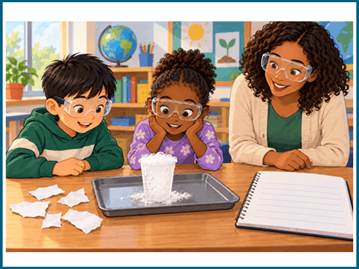
Quick practice: physical or chemical?
Ask your child to label each example P for physical or C for chemical. Then choose two answers to explain.
1. Water freezes in an ice tray.
2. An iron gate becomes rusty.
3. A sheet of paper is cut into a snowflake.
4. A cut apple turns brown.
5. Sugar dissolves in water.
6. Baking soda and vinegar react and fizz.
Answers:
1. P: The water changes from liquid to solid but remains water.
2. C: Rust forms as iron reacts with oxygen and moisture.
3. P: The paper changes shape but is still paper.
4. C: Reactions at the exposed surface form new substances.
5. P: Sugar spreads through the water without forming a new substance.
6. C: The reaction produces new substances, including carbon dioxide gas.
For an extra challenge, ask: “Is cutting an apple the same kind of change as the cut apple turning brown? Explain.”
Continue learning with K5 Learning worksheets
Review solids, liquids and gases with our states of matter worksheets.
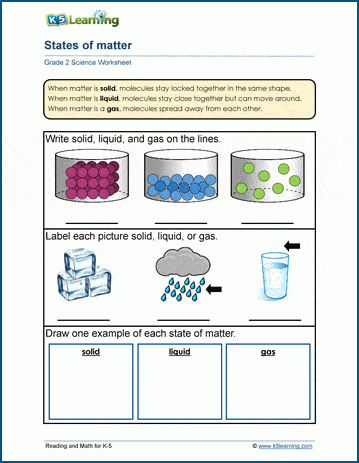
Our reversible changes worksheets offer another way to discuss everyday changes. These Grade 2 resources can provide a foundation or review for older children. Remind your child that whether a change can be undone is a different question from whether a new substance forms.

For more background, explore our states of matter explanation.