
 Thanksgiving WS's!


If your child squeezes the pencil, leans close to the page or stops to shake out their hand, start by looking at where and how they write. A footrest, a small turn of the paper or a lighter hold can make the next line easier. Use these tips whether your child is tracing their first letters, learning to print on their own or beginning to write in cursive.
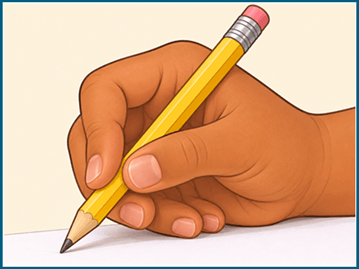
How should your child hold a pencil?
The tripod grip is a common way to hold a pencil. Show your child how to hold it lightly between the thumb and index finger and let it rest on the side of the middle finger. Leave enough room between the fingers and the tip for your child to see what they’re writing. The other two fingers can curl loosely toward the palm.
Try this cue: “Pinch, rest and relax.” Ask your child to draw a few small loops. If the loops leave deep grooves or your child’s fingers look tense, pause and try the next few loops with a lighter touch.
Some children use a comfortable four-finger grip. If your child can see what they’re writing, move the pencil easily and produce readable letters without discomfort, their grip is doing its job.
Set up a comfortable place to write
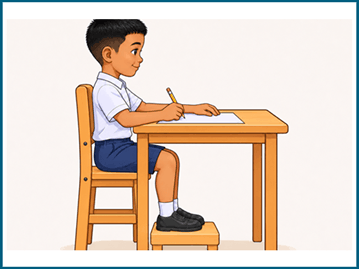
Watch your child write a word at the table. If their feet dangle or their shoulders rise toward their ears, adjust the seat or work surface before asking them to change their grip.
1. Support the feet. Have your child place both feet flat on the floor or on a stable footrest. A low stool can help at a kitchen table.
2. Check the table height. With your child seated comfortably and their shoulders relaxed, the tabletop should be around elbow height. Their forearms should be able to rest on the surface.
3. Move the page within reach. Place it slightly toward the writing hand and try a small tilt. Ask your child to use their free hand to steady the page as they write.
If your child writes left-handed
Start with the page slightly to the left and tilt it so the top-left corner sits a little higher than the top-right corner. Try moving the fingers a little farther from the pencil tip so your child can see the letters as they write. Adjust the angle until their writing hand can move along the line with the wrist fairly straight and the hand below the writing line.
Practice with tracing, printing or cursive worksheets
Choose one adjustment and give your child a small task so they can feel the difference. For example, if their feet usually dangle, add a footrest and ask them to trace or write the first letter of their name. Then ask, “Did your hand feel more relaxed?”
Practice pencil control with our Tracing Workbook
Our Tracing Workbook gives preschool and kindergarten children practice following lines, curves and shapes before they move on to tracing letters and numbers. Pick one short path and ask your child to follow it slowly with a light grip. Have them steady the page with their free hand and keep both feet supported.
Trace a letter
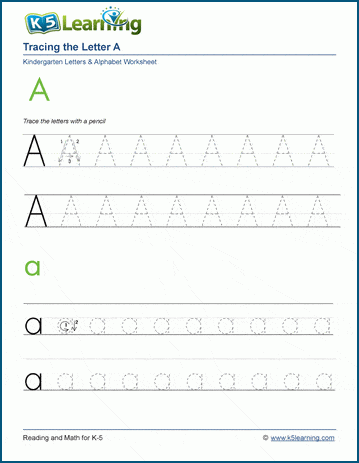
Choose a familiar letter, such as M or m. Show your child where to start, then ask them to trace one or two letters with a light touch. When they’re ready, have them try the same letter beside the model. Our letter tracing worksheets cover uppercase and lowercase letters from A to Z.
Move from tracing to printing
When your child can trace the letter comfortably, ask them to look at the model and write it on their own. Try a lowercase m on a line and see whether both humps are about the same height. Use our printing letters worksheets to practise forming uppercase and lowercase letters.

Try cursive when your child is ready
Start with a familiar cursive letter, such as lowercase l and lowercase e. Once your child can form l and e on their own, have them try joining the two in le. Our cursive writing worksheets include individual letters, letter joins and whole words.

A few letters or one short word is enough for a check-in. If your child starts squeezing the pencil again or says their hand feels tired, take a break. If writing regularly hurts or hand fatigue makes it hard to finish everyday schoolwork, mention what you’re seeing to your child’s teacher for guidance.