


A descriptive paragraph helps the reader picture a person, place, object, or scene. For students in grades 3–5, a familiar subject is a good place to start. Ask your child to describe their backpack, a corner of the playground, or the kitchen while cooking dinner.
Start with a topic sentence
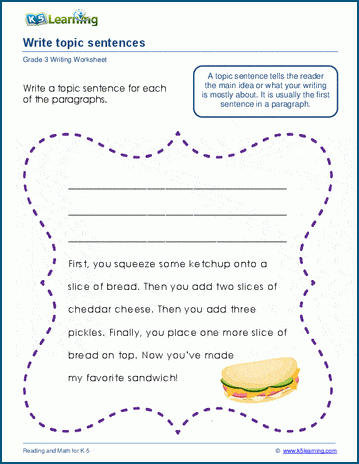
A topic sentence introduces the subject and gives the reader an idea of what to notice.
• Too broad: The playground was nice.
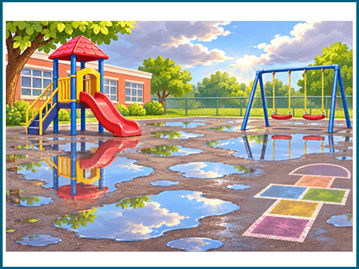
• More specific: After the rain, puddles covered the playground.
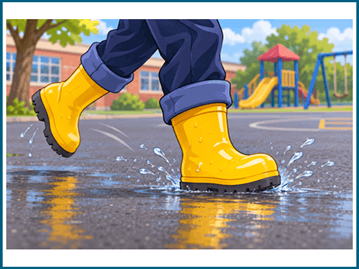
The second sentence gives the paragraph a clear focus. Details about wet swings and splashing boots fit that focus. A sentence about what your child ate for lunch would pull the reader away from the scene.
For practice with opening sentences, try our grade 3 topic sentence worksheets.
Add details the reader can imagine
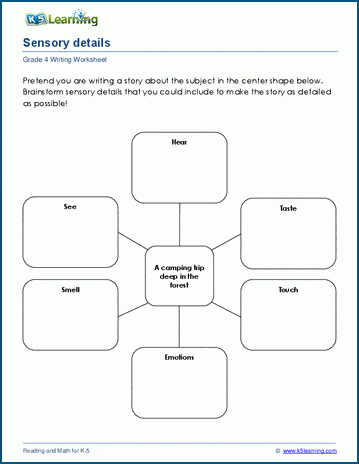
Ask your child what they might see, hear, smell, taste, or feel. Choose the details that best fit the subject. Two or three senses are often enough.
• Sight: Drops of water clung to the swing chains.
• Sound: Boots slapped against the wet pavement.
• Touch: The metal slide felt cold and slick.
Specific nouns and verbs do much of the work. In “Boots slapped against the wet pavement,” the words boots and slapped help the reader picture and hear the scene.
Use our grade 4 sensory details worksheets to brainstorm details before writing.
Put the details in order
For a place, your child can describe what is nearby first and then move farther away. For an object, they can start with its overall appearance and then zoom in on one or two details.
Example 1 — A playground after the rain
After the rain, puddles covered the playground. By the gate, boots slapped against the wet pavement. Farther in, drops of water clung to the swing chains. At the back of the playground, the metal slide felt cold and slick.
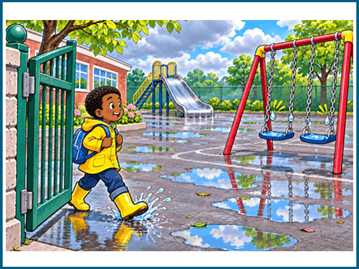
The description moves from the gate to the swings to the slide. The final sentence leaves the reader with one last detail.
Example 2 — A well-used backpack
My red backpack is worn from years of school trips. The fabric has faded to pink along the top, and one strap has a patch of blue stitching. The zipper catches halfway around the front pocket. When I tug it open, pencil shavings spill into my hand.
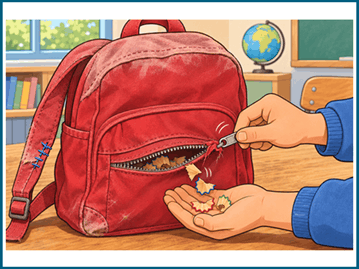
The paragraph moves from the whole backpack to the strap, zipper, and pocket. Each detail supports the opening idea that the backpack is well used.
Try it together
Ask your child to describe a kitchen while someone is making toast. Have them write an opening sentence, add two or three details, and read the paragraph aloud. If they use a broad word such as nice, ask what the reader could see, hear, or smell instead.
Sample answer
The kitchen smelled like warm toast. Two golden slices popped up with a click. On the plate, butter melted into the little holes in the bread. A few crisp crumbs scattered across the table.

For another prompt, try our grade 4 descriptive writing worksheets.

The grade 5 settings and sensory details worksheets give students practice choosing details to bring a setting to life.

If your child needs help organizing their ideas, see How to Plan Writing a Paragraph with a Graphic Organizer.