


Subordinate clauses can sound like one of those grammar terms that feels far more complicated than it really is. Many parents hear the phrase and immediately think of confusing school grammar lessons or worksheets filled with commas and conjunctions.
But once you understand the basic idea, subordinate clauses are actually quite simple.
If your child is learning grammar in elementary school, especially in the upper elementary years, they may come home talking about main clauses, subordinate clauses, conjunctions, and sentence structure. Knowing what these terms mean can make it much easier to help with homework and support their writing at home.
The good news is that you do not need to be a grammar expert.
This guide will explain subordinate clauses clearly, show simple examples, and help you understand how children learn to use them in reading and writing.
What Is a clause?
Before understanding subordinate clauses, it helps to understand what a clause is.
A clause is a group of words that contains a subject and a verb.
For example:
the dog barked
I finished my homework
Each of these has someone or something doing an action.
Some clauses can stand alone as complete sentences.
For example:
The dog barked.
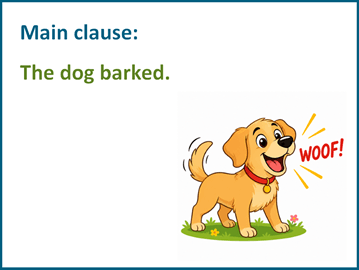
This makes complete sense on its own.
This is called a main clause (sometimes called an independent clause).
What is a subordinate clause?
A subordinate clause also contains a subject and a verb, but it cannot stand alone as a complete sentence.
It needs the main clause to make sense.
For example:
because the dog barked
This is not a complete sentence by itself. It leaves us asking:
Because the dog barked… what happened?
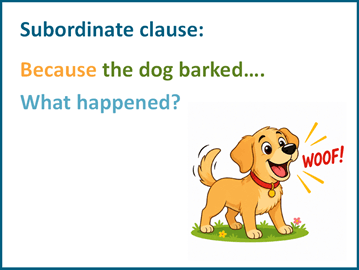
It depends on another clause to complete the meaning.
That is why it is called a subordinate clause. It is dependent on the main clause.
A simple example
Let’s look at a full sentence:
I woke up because the dog barked.
Here:
Main clause: I woke up
Subordinate clause: because the dog barked
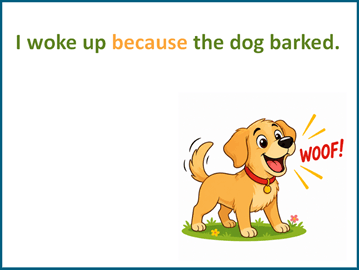
The subordinate clause gives extra information, but it cannot stand alone.
Words that often introduce subordinate clauses
Subordinate clauses often begin with certain joining words called subordinating conjunctions.
Common examples include:
because
when
if
although
while
after
before
since
unless
even though
For example:
We stayed inside because it was raining.
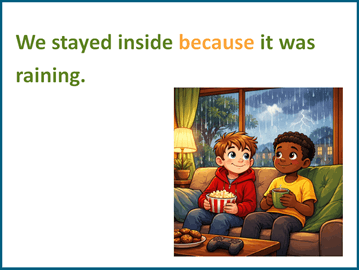
When the bell rang, the children lined up.
Although she was tired, she finished her homework.
These words signal that the clause depends on another part of the sentence.
Why do children learn subordinate clauses?
Subordinate clauses help children make their writing more detailed, interesting, and mature.
Instead of writing:
I was tired. I went to bed.
they can write:
I went to bed because I was tired.
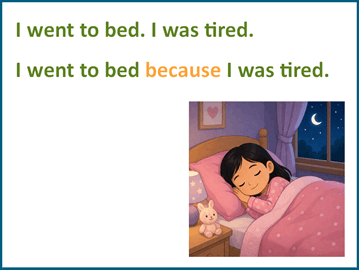
This improves sentence flow and helps children explain ideas more clearly.
Using subordinate clauses helps with:
sentence variety
explanation and reasoning
descriptive writing
stronger storytelling
more advanced reading comprehension
This is why schools place so much focus on them.
How subordinate clauses help in reading
Understanding subordinate clauses is not just about writing.
It also helps children understand more complex texts.
For example:
Although the journey was long, they finally arrived safely.

A child who understands subordinate clauses can more easily follow how ideas connect.
This improves comprehension, especially as reading becomes more challenging in later elementary years.
Common difficulties children have
Many children can use subordinate clauses naturally in speech before they can identify them in grammar lessons.
The challenge is often naming them.
They may struggle with:
spotting where the subordinate clause begins
identifying the subordinating conjunction
knowing where commas belong
understanding why one clause cannot stand alone
This is completely normal.
Grammar language often takes time to stick.
How parents can help at home
You do not need formal grammar lessons to help your child.
Simple conversations can make a big difference.
Try asking:
Can this part of the sentence stand alone?
Which word is joining the ideas?
What extra information does this clause add?
You can also play simple games by expanding short sentences.
For example:
Start with:
The boy ran.
Then add:
because he was late
when the bell rang
although it was raining
This helps children hear how subordinate clauses work naturally.
A helpful tip to remember
A quick test is this:
Can the clause make sense on its own?
If yes, it is probably a main clause.
If no, it is probably a subordinate clause.
For example:
because she was hungry
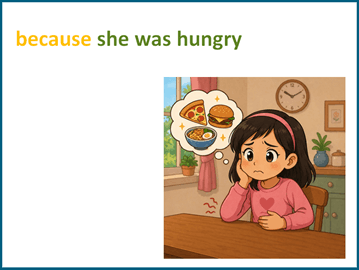
This cannot stand alone.
It is subordinate.
Final thoughts
Subordinate clauses may sound like a difficult grammar topic, but they are really just sentence helpers. They add detail, explain ideas, and connect thoughts together.
Once children understand the difference between a main clause and a subordinate clause, their writing often becomes stronger and more confident.
And for parents, simply understanding the basics makes supporting homework much less stressful.
Grammar does not need to feel intimidating.
Sometimes it just starts with understanding one small part of the sentence.