


Learning to read isn’t always smooth. Many children get stuck on words that look tricky at first. That is, longer words, unfamiliar words, or words with more than one part. These are often the moments when kids guess, rush, or give up.
The good news is that most of these words can be sounded out. With a few simple strategies, adults can help children slow down, break words apart, and read with confidence.
Why some words feel tricky to kids
Words don’t have to be irregular to feel hard. Children often struggle with words that:
Are longer than what they’re used to
Have more than one syllable
Include endings like -ing or -ed
Contain unfamiliar letter patterns
These words may feel tricky, even though they follow normal phonics rules.
Here are some strategies to help your children sound out harder words.
Encourage kids to look at the whole word
When kids see a word that feels hard, they often guess based on the first letter or the picture. Gently remind them to slow down and look at all the letters.
Helpful prompts:
“Let’s look at the whole word.”
“Did we use every letter?”
“What sound does this part make?”
Following the word with a finger can help children stay focused and read carefully.
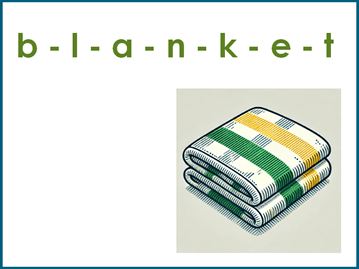
Break the word into smaller parts
Longer words become much easier when kids learn to break them into parts.
For example:
sunshine → sun + shine
basket → bas + ket
jumping → jump + ing
Clapping syllables, tapping the table, or using fingers to mark each part can make this strategy more concrete.

Stretch the sounds slowly
If a child rushes through a word, encourage them to stretch the sounds out.
You might model:
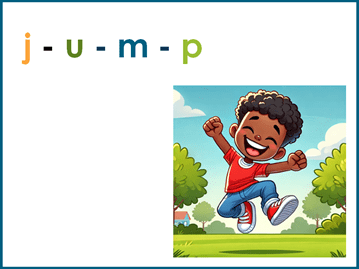
“Let’s say it slowly: jjj–uuu–mmm–p.”
Once each sound is clear, help them blend the sounds back together smoothly.
Point out familiar patterns
Many “tricky-looking” words contain patterns kids already know. Help them spot those familiar pieces.
Examples include:
Word families (cat, hat, bat)
Blends (st, bl, gr)
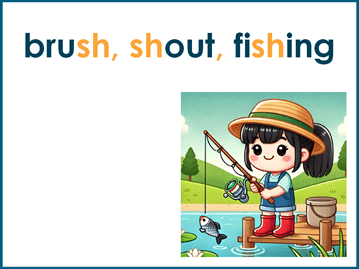
Digraphs (sh, ch, th)
Common endings (-ing, -ed, -er)
Recognizing patterns helps children realize the word isn’t as hard as it first seemed.
Use pictures as a check, not a shortcut
Pictures can support comprehension, but decoding should come first.
A good approach:
Try sounding out the word
Then check the picture to see if it makes sense
This helps kids rely on reading skills rather than guessing.
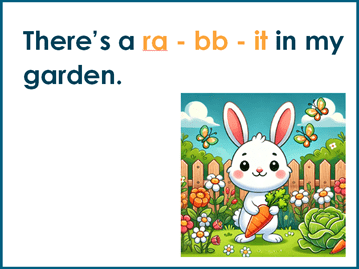
Praise the process, not just the result
Sounding out words takes effort. Even if the word isn’t read perfectly, noticing the attempt builds confidence.
Try saying:
“I like how you broke that word apart.”
“You tried every sound—that’s great reading.”
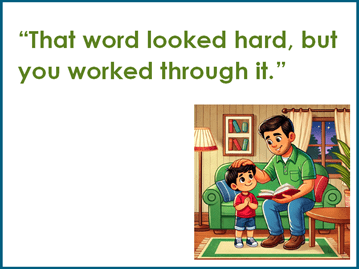
“That word looked hard, but you worked through it.”
Confidence grows when effort is valued.
Practice with books that fit the child
Children need books that allow them to practice these skills successfully. Texts that are too hard encourage guessing instead of decoding.
Look for books that:
Match the child’s phonics knowledge
Use familiar patterns
Include repetition and simple sentences
A final thought
Every reader comes across words that feel tricky. Learning how to slow down, break words apart, and try again helps children become independent readers.
When kids know how to handle challenging words, reading becomes less stressful—and much more enjoyable.