


Problem-solving is one of the most important skills children develop in elementary school. While worksheets and classroom lessons play a role, some of the most powerful learning happens when children explore, experiment, and figure things out for themselves. Science projects are especially effective because they naturally encourage curiosity, persistence, and critical thinking.
The good news is that you don’t need a lab or special materials to help your child build these skills. Many of the best science projects can be done right at home using everyday items. What matters most is not the “right answer,” but the process of asking questions, testing ideas, and learning from mistakes.
Below are several simple science projects, along with explanations of how each one helps strengthen your child’s problem-solving abilities.
Building a strong bridge with paper
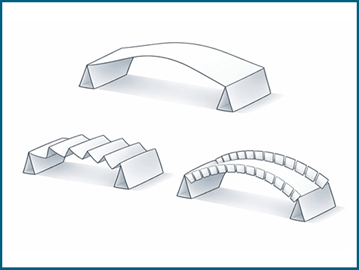
One engaging challenge is to ask your child to build a bridge using only paper and a few books or small objects for support. At first, many children will lay the paper flat between two surfaces, only to see it collapse under even a small amount of weight. This moment of failure is actually where the learning begins.
Encourage your child to think about how they might make the bridge stronger. They may try folding the paper, rolling it into tubes, or layering multiple sheets together. Through trial and error, they begin to understand how shape and structure affect strength.
This activity teaches children to revise their ideas based on results. They learn that when something doesn’t work, it’s not a failure, it’s a clue that helps them improve their design.
The mystery of the melting ice
A simple ice experiment can turn into a rich problem-solving experience. Place a few ice cubes in separate bowls and ask your child how they might make one melt faster than the others.
Without giving answers, let them come up with ideas. They might suggest adding salt, placing one in the sun, or wrapping one in a cloth. As they test their ideas, they observe which conditions speed up melting and which slow it down.
What makes this activity powerful is the decision-making process. Children must form a hypothesis, test it, and then reflect on what happened. They begin to see that science is not about guessing correctly the first time, but about exploring possibilities and learning from outcomes.

Growing plants in different conditions
Planting seeds is a classic activity, but it becomes much more meaningful when framed as a problem to solve. Instead of simply growing a plant, ask your child: What do plants need to grow best?
You can plant several seeds and place them in different conditions—one with lots of sunlight, one in the shade, one with extra water, and one with very little. Over time, your child observes how each plant develops.
As they compare results, they start to draw conclusions. They may notice that too much or too little water affects growth, or that sunlight plays a major role. This type of experiment teaches children to analyze patterns and make evidence-based decisions.

The classic baking soda and vinegar reaction
The well-known baking soda and vinegar reaction is always exciting, but it can also be turned into a problem-solving challenge. Instead of simply watching the reaction, ask your child how they might create the biggest “eruption.”
They can experiment with different amounts of baking soda and vinegar, different container sizes, or even adding dish soap. Each attempt provides new information.
Through this process, children learn to adjust variables and observe cause and effect. They begin to understand that changing one part of an experiment can influence the outcome, a key concept in scientific thinking.

Designing a paper airplane that flies farther
Paper airplanes offer a perfect blend of creativity and science. Invite your child to design a plane that can fly as far as possible. After testing their first design, ask what they think could be improved.
They might adjust the wings, change the folds, or make the plane heavier or lighter. Each flight becomes a test of their ideas.
This activity encourages persistence and refinement. Children learn that improvement often comes from small changes and repeated testing, not from getting everything perfect on the first try.

Why these projects matter
What all of these activities have in common is that they shift the focus from getting the “right answer” to engaging in the process of thinking. Children learn to ask questions, make predictions, test ideas, and adapt when things don’t go as planned.
These are the same skills they will use in math, reading, and everyday life. A child who learns to approach problems with curiosity and resilience is better prepared to handle challenges both inside and outside the classroom.
Supporting your child at home
As a parent, your role is not to provide answers, but to guide thinking. When your child gets stuck, try asking open-ended questions like:
“What do you think will happen if…?”
“Why do you think that didn’t work?”
“What could you try next?”
These questions encourage deeper thinking and help children take ownership of their learning.
It’s also important to create an environment where mistakes are seen as part of the process. When children feel safe to experiment and even fail, they are more willing to take risks and explore new ideas.
Final thoughts
Simple science projects can have a lasting impact on how children approach problems. With just a few materials and a bit of curiosity, you can turn everyday moments into meaningful learning experiences.
By encouraging your child to experiment, reflect, and try again, you are helping them develop skills that will benefit them for years to come—not just in science, but in every area of their life.