


Have you ever held a tiny seed in your hand?
It may not look very exciting. Some seeds are as small as grains of sand. Others are no bigger than a marble. Yet inside every healthy seed is something incredible: a tiny living plant waiting for the right moment to begin growing.
Every giant oak tree, colourful sunflower, juicy peach, crunchy carrot, and field of wheat began as a seed. Some seeds grow into flowers that brighten our gardens. Others become vegetables we eat for dinner. Other yet, trees that provide shade for hundreds of years.
Seeds are one of nature's greatest inventions. They allow plants to survive, spread to new places, and produce new generations year after year.
Let's explore the amazing world of seeds and discover the clever ways they travel, grow, and survive.
What is a seed?
A seed is the part of a plant that can grow into a new plant.
Although seeds come in many different sizes and shapes, they all have the same important job. They protect the next generation of plants until the conditions are right for growing.
Think of a seed as a tiny survival kit.
Inside almost every seed are three important parts.
1. The baby plant
Hidden inside the seed is a tiny baby plant called an embryo.
Although it is much too small to see in many seeds, it already has the beginnings of:
roots
a stem
tiny leaves
Everything needed to grow into a new plant is already there.
2. Food for the journey
Young plants cannot make their own food immediately.
Instead, the seed stores food for the baby plant. This food provides energy until the first leaves appear and begin making food from sunlight.
It's a little like packing a lunch before going on a long hike.
3. A protective coat
The outside covering is called the seed coat.
This tough layer protects the baby plant from:
drying out
insects
damage
cold weather
Some seed coats are so hard that they must soften in water before the seed can begin growing.
Seeds come in every shape and size
One of the most exciting things about seeds is that they look so different from one another.
Some are almost invisible, while others are surprisingly large.
Here are a few examples.
Plant: Size of the Seed
Orchid: Smaller than a grain of sand
Poppy: Tiny like pepper
Apple: About the size of a fingernail
Pumpkin: Flat and white
Acorn: About the size of a small marble
Coconut: One of the largest seeds in the world
Each seed has evolved to suit the plant's way of life.
Why are seeds so different?
Imagine if every seed looked exactly the same.
Some would not travel very far. Others would not survive bad weather or hungry animals.
Different shapes help different plants survive.
Some seeds are:
smooth
rough
fuzzy
winged
spiky
sticky
waterproof
lightweight
heavy
Every feature has a purpose.
How do seeds travel?
Plants cannot simply walk to a better place.
Instead, they have developed amazing ways of spreading their seeds far away from the parent plant.
Scientists call this seed dispersal.
Let's look at some of nature's cleverest methods.
Wind travellers
Some seeds are incredibly light.
They use the wind almost like tiny parachutes or helicopters.
Dandelions
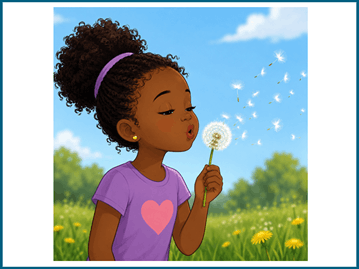
When you blow on a dandelion, each fluffy parachute carries one seed.
A strong breeze can carry these seeds hundreds of metres away.
Imagine hundreds of tiny parachutes floating through the sky.
Maple trees
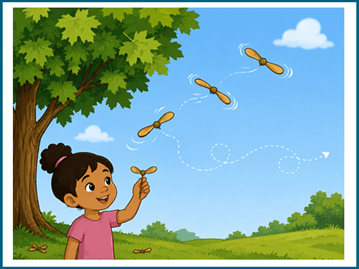
Have you ever picked up one of the little "helicopters" that fall from maple trees?
These winged seeds spin as they fall.
The spinning slows them down and helps the wind carry them farther from the parent tree.
Children often enjoy tossing them into the air and watching them twirl.
Ash trees
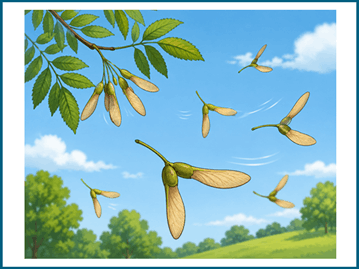
Ash tree seeds also have long wings.
Instead of spinning quickly like maple seeds, they glide gently through the air.
Animal travellers
Animals help many plants spread their seeds.
Sometimes they do it without even noticing.
Burrs
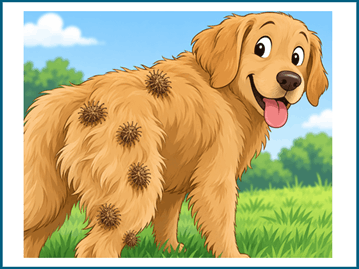
Have you ever found prickly burrs stuck to your socks or your dog's fur after a walk?
Those tiny hooks are designed to cling to passing animals.
Eventually the burr falls off somewhere else, giving the seed a brand-new place to grow.
Berries
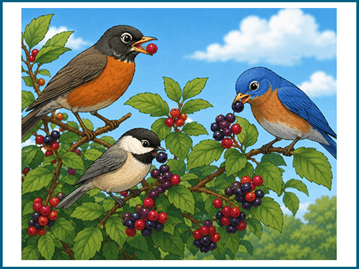
Birds love eating berries.
The juicy fruit is digested, but many seeds pass safely through the bird's body.
Later, the bird leaves the seeds in a completely different place.
Nature has found a clever way of planting new berry bushes.
Squirrels
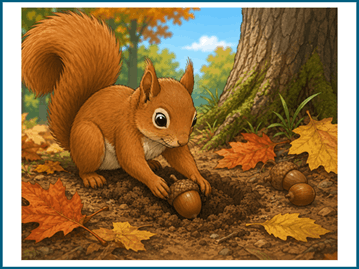
Squirrels collect acorns and bury them for winter.
Sometimes they forget where they hid them.
Those forgotten acorns often grow into new oak trees.
The squirrel accidentally becomes a gardener.
Water travellers
Some seeds are built like tiny boats.
Their waterproof coverings help them float for long distances.
Coconut
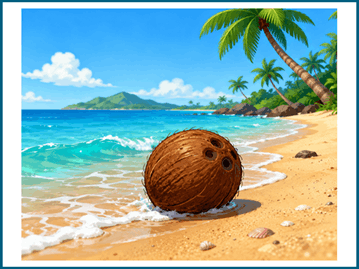
Coconuts are famous for travelling across oceans.
Their thick fibrous husks trap air, allowing them to float for weeks or even months before washing onto a tropical beach.
Mangrove seeds
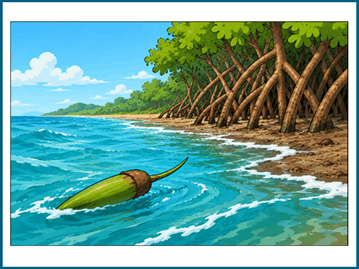
Mangrove trees grow near the ocean.
Their long floating seeds drift with the tides until they reach muddy shores where they begin growing.
Exploding seeds
Some plants don't wait for animals or wind.
Instead, they launch their own seeds.
As the seed pods dry, pressure builds inside.
Eventually they burst open and fling seeds several metres away.
Examples include:
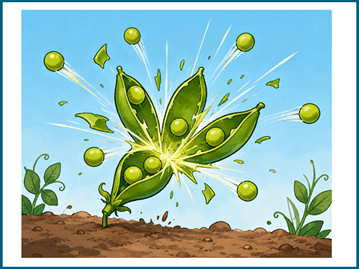
touch-me-not plants
lupins
peas
gorse
Children often find exploding seed pods surprising and exciting.
Heavy seeds
Not every seed travels far.
Some simply fall to the ground beneath the parent tree.
Acorns
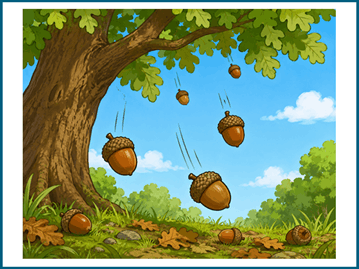
Acorns are heavy.
Most simply drop from oak trees.
Animals such as squirrels, blue jays, and mice help carry many of them farther away.
Chestnuts
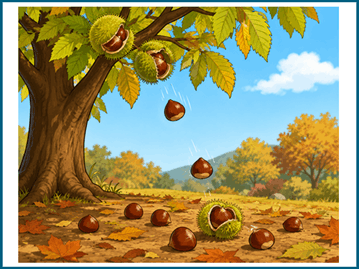
Chestnuts fall inside spiky green cases.
The spines protect the seeds until they are ready to grow.
What does a seed need to grow?
Although different plants have different needs, most seeds require four basic things.
Water
Water softens the seed coat.
It also wakes up the tiny plant inside.
Without water, many seeds remain dormant.
Air
Seeds need oxygen to produce energy.
Even before leaves appear, the tiny plant is already "breathing."
Warmth
Most seeds begin growing when temperatures become warmer in spring.
Some even need a period of cold weather first before they will sprout.
This prevents them from growing during winter.
Time
Not every seed grows quickly.
Bean seeds may sprout in less than a week.
Oak trees take much longer.
Some seeds remain dormant for years before growing.
Amazing seeds around the world
Nature has produced some truly remarkable seeds.
The tiniest seeds
Orchid seeds are so small they can easily float in the air like dust.
Thousands can fit inside one seed pod.
The largest seed
The coco de mer palm produces the world's largest seed.
It can weigh over 40 pounds (18 kilograms)!
That's heavier than many young children.
Seeds that wait
Some desert plants can wait years for rain.
The seeds stay safely dormant until enough water arrives.
Then thousands sprout almost overnight.
Why learning about seeds matters
Seeds teach children much more than how plants grow.
By studying seeds, children learn about life cycles, habitats, adaptation, weather, ecosystems, and the ways living things survive. They begin asking scientific questions, making predictions, observing carefully, and looking for patterns in nature.
Perhaps most importantly, seeds remind us that even the biggest trees started out incredibly small.
The next time you pick up an acorn, a maple "helicopter," or a fluffy dandelion seed, take a closer look. Inside that tiny package is an entire new plant waiting for its chance to grow.