
 Halloween W'sheets!

Reading with your child is one of the best ways to support their learning. But reading the words on the page is only part of becoming a strong reader. Children also need to understand, remember, and think about what they read. This skill is called reading comprehension.
The good news is that helping your child improve their comprehension does not require special training or long lessons. A few simple questions during or after reading can help children think more deeply about stories and build important literacy skills.
Why reading comprehension matters
A child may read every word correctly and still struggle to understand what the text means. Strong comprehension skills help children:
Remember important information
Understand characters and events
Make predictions
Learn new vocabulary
Think critically about what they read
Become more confident readers
When parents ask questions, children learn that reading is about understanding ideas, not just saying words aloud.
Questions to ask before reading
Before your child begins reading, try asking questions that encourage them to think about the book.
Examples
Q: What do you think this story will be about?
A: It looks like it might be about a dog because there is a dog on the cover.
Q: What do you already know about this topic?
A: I know that penguins live where it is very cold.
Q: What do you notice in the pictures?
A: The boy looks worried.
These questions activate your child's background knowledge and prepare their brain to understand the story.
Questions to ask during reading
As your child reads, pause occasionally to check their understanding.
Examples
Q: What has happened so far?
A: The girl lost her backpack and is looking for it.
Q: Why do you think the character did that?
A: He wanted to help his friend.
Q: How do you think the character feels right now?
A: She seems nervous because she has to speak in front of the class.
Q: What do you think will happen next?
A: I think they will find the missing puppy.
These questions encourage children to think beyond the words on the page and make connections between events.
Questions to ask after reading
After finishing a story, ask questions that help your child reflect on what they read.
Examples
Q: What was the story mostly about?
A: It was about a girl who learned how to ride a bike.
Q: Who were the main characters?
A: Mia, her brother, and their dog.
Q: What was the problem in the story?
A: The dog ran away.
Q: How was the problem solved?
A: They found the dog at the park.
Q: What was your favourite part?
A: When the dog jumped into the pond.
Q: Would you recommend this book to a friend? Why?
A: Yes, because it was funny.
These types of questions help children summarize information and identify important story elements.
Questions that encourage deeper thinking
As children become stronger readers, you can ask questions that require more thinking.
Examples
Q: Why do you think the author wrote this story?
A: To teach readers about friendship.
Q: What lesson did the character learn?
A: She learned to be honest.
Q: What would you have done differently?
A: I would have asked for help sooner.
Q: Did the ending surprise you? Why or why not?
A: Yes, because I thought the treasure would be hidden somewhere else.
These questions encourage critical thinking and help children analyze what they read.
Keep it fun
Reading comprehension should feel like a conversation, not a test. Avoid asking too many questions or interrupting the story too often. Instead, choose one or two questions that match your child's age and reading level.
Remember:
Be encouraging.
Accept different reasonable answers.
Ask follow-up questions.
Celebrate effort and thinking.
The goal is not to get the "right" answer every time. The goal is to help your child become an active reader who thinks about what they read.
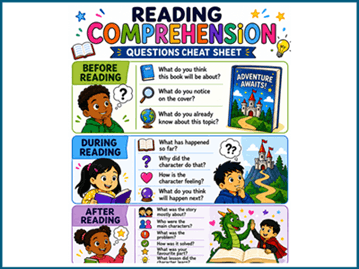
Quick reading comprehension questions cheat sheet
Before reading
What do you think this book will be about?
What do you notice on the cover?
What do you already know about this topic?
During reading
What has happened so far?
Why did the character do that?
How is the character feeling?
What do you think will happen next?
After reading
What was the story mostly about?
Who were the main characters?
What was the problem?
How was it solved?
What was your favourite part?
What lesson did the character learn?
A few simple questions can turn story time into a powerful learning experience. By talking about books together, parents help children build stronger comprehension skills, richer vocabulary, and a lifelong love of reading.