
 Halloween W'sheets!

With just one pumpkin, children can investigate everything from how a pumpkin grows to what is hiding inside it. Here are eight simple pumpkin science activities to try at home or in the classroom.
Examine the outside of a pumpkin
Before cutting the pumpkin open, encourage your child to take a close look at it.
What color is it? Is the surface smooth or bumpy? How many lines, or ribs, can they see? Is the pumpkin perfectly round, or is one side flatter than the other?
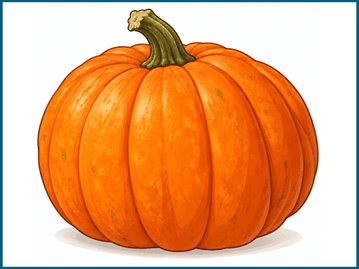
Children can also examine the stem and look for scratches, spots and other interesting features.
Try comparing two or three different pumpkins. Children may be surprised by how different they can be in size, shape, color and texture.
Science skills: observing, comparing and describing
Measure the pumpkin
A pumpkin provides an easy way to practice measurement.
Children can measure its height with a ruler or measuring tape. To measure around the widest part, wrap a flexible measuring tape or piece of string around the pumpkin.
Older children can record the measurements of several pumpkins and compare them.
Before measuring, ask your child to make an estimate. How tall do they think the pumpkin is? How far is it around?
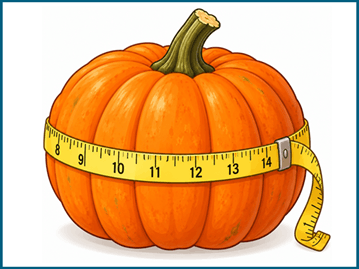
Then measure it to find out how close their estimate was.
Science and math skills: estimating, measuring, recording and comparing
Find out how much a pumpkin weighs
Have your child pick up the pumpkin and estimate how much it weighs before putting it on a scale.
If you have several pumpkins, arrange them from lightest to heaviest based on your child's predictions. Then weigh each pumpkin to see if the order was correct.
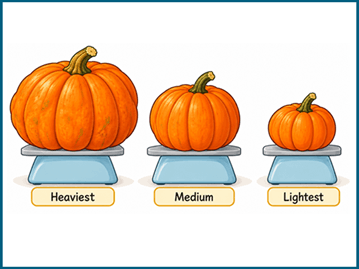
Children can also compare the pumpkin's weight with familiar objects around the house.
Does the biggest pumpkin always weigh the most?
Science and math skills: predicting, weighing and comparing
Predict whether a pumpkin will sink or float
A large, heavy pumpkin looks as though it should sink in water. But will it?
Ask your child to make a prediction before placing a small pumpkin in a large container or sink filled with water.
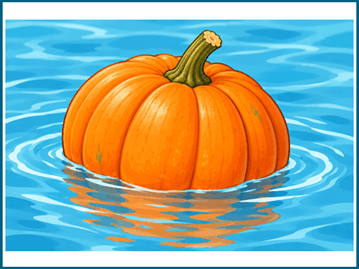
Most whole pumpkins float. Although pumpkins can be quite heavy, they contain a lot of air inside, which helps make their overall density lower than that of water.
Try the experiment with pumpkins of different sizes. Children can also test other fall fruits and vegetables and record which ones sink and which ones float.
Science skills: predicting, experimenting and learning about buoyancy and density
Explore what's inside a pumpkin
Now it's time to cut the pumpkin open.
An adult should do the cutting, but children can examine the inside.
Ask them to identify what they see. There's the thick outer skin, the firm flesh, stringy pulp and lots of seeds.
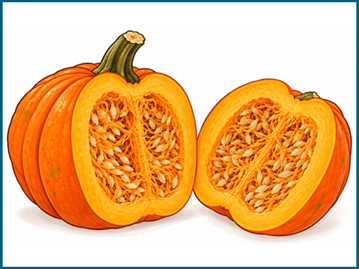
Let children touch and describe the different parts. Is the flesh hard or soft? Are the seeds slippery? What does the inside smell like?
This is also a good opportunity to introduce the different parts of a pumpkin and discuss what each part does.
Science skills: observing, identifying parts and using descriptive vocabulary
Estimate and count the seeds
Before removing the seeds, ask your child to guess how many are inside the pumpkin.
Ten? Fifty? One hundred? More?
Scoop out the seeds, clean them and then count them.
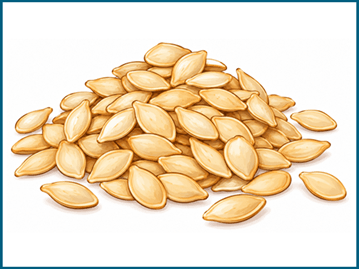
Counting one at a time can become difficult if there are lots of seeds, so children can organize them into groups of 5, 10 or 20. This turns the activity into a useful math exercise as well.
If you have more than one pumpkin, compare the results. Does a bigger pumpkin necessarily contain more seeds?
Science and math skills: estimating, counting, grouping and comparing
Learn how a pumpkin grows
Those little seeds can eventually grow into entirely new pumpkin plants.
Explore the pumpkin life cycle with your child:
Seed → sprout → vine → flower → green pumpkin → ripe pumpkin
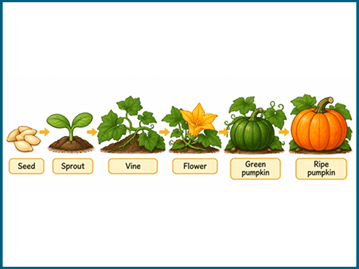
Talk about what a pumpkin plant needs to grow, including soil, water, sunlight and warmth.
You can even save a few seeds and try planting them. Children can observe what happens over time and keep a simple record of any changes they see.
This is a great way to introduce the idea that plants have life cycles.
Science skills: understanding plant growth, life cycles and change over time
Watch a pumpkin decompose
Don't throw away that carved or cut pumpkin just yet. It can become one final science experiment.
Place a piece of pumpkin outside in a safe spot where children can observe it without touching it. Check it every few days and record what changes.
Does it change color? Become softer? Develop mold? Attract insects?
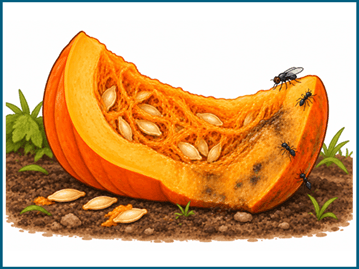
Explain that decomposition is a natural process. Fungi, bacteria and other decomposers help break down dead plants and return nutrients to the soil.
Children could take a photograph or draw a picture each time they observe the pumpkin to create a simple decomposition diary.
Science skills: observing changes, recording results and learning about decomposition
Turn a pumpkin into a math and science lesson
You don't need special equipment to introduce children to scientific thinking. Something as ordinary as a pumpkin can encourage them to observe closely, ask questions, make predictions, measure, compare and investigate.
And when you're finished with the science activities, you can still carve it, cook it or roast the seeds.
That's a lot of learning from one pumpkin.