
 Halloween W'sheets!

Learning to read is one of the most important milestones in a child’s early education, and phonics plays a central role in that process. Phonics helps children understand how written letters connect to spoken sounds, giving them the tools they need to read unfamiliar words and build strong literacy skills.
While phonics is taught in the classroom, practicing these skills at home can make a powerful difference. The good news is that supporting phonics at home does not require special training, expensive resources, or long lessons. With just a few minutes each day and some simple, playful activities, parents can help reinforce what children are learning at school.
What is phonics?
Phonics is the method of teaching reading by helping children understand the relationship between letters (graphemes) and the sounds they represent (phonemes).
For example:
The letter b represents the /b/ sound as in ball
The letter combination sh represents the /sh/ sound as in ship
As children begin to recognize these patterns, they learn how to blend sounds together to read words and break words apart to spell them.
Instead of memorizing entire words, children use phonics to “figure out” new words on their own. This skill, known as decoding, is essential for becoming a confident and independent reader.
Why practice phonics at home?
Regular phonics practice at home helps children strengthen and extend what they learn at school. When children revisit these skills in a relaxed, familiar environment, they often feel more confident and willing to try.
Children who practice phonics regularly tend to:
Read more fluently and with greater ease
Spell words more accurately
Recognize patterns in words more quickly
Approach new or challenging words with confidence
Develop a stronger overall foundation in reading
Even short, consistent practice—just 5 to 10 minutes a day—can lead to noticeable progress over time.
Simple phonics activities to try at home
These activities are designed to be easy to set up, enjoyable for children, and effective in building key phonics skills.
Sound hunt around the house
Choose a specific sound and invite your child to find objects around the house that begin with that sound. This turns phonics into an active, engaging game.
For example:
/b/ → book, ball, bag
/t/ → table, toy, towel
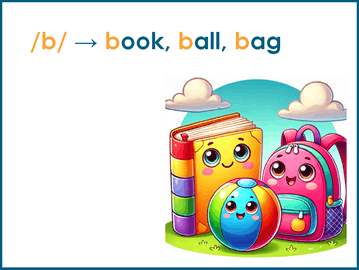
You can extend the activity by asking your child to:
Say the word slowly and emphasize the beginning sound
Sort objects by different starting sounds
This activity helps children connect sounds to real-world objects and strengthens their ability to recognize beginning sounds.
Build-a-word game
Using letter cards, or even handwritten letters on small pieces of paper, help your child build simple words.
Start with short, familiar words:
c + a + t → cat
s + i + t → sit
Once your child is comfortable, change one letter at a time:
cat → bat → bit → sit
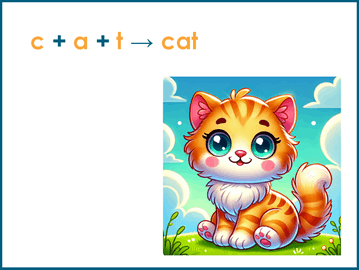
Encourage your child to say each sound as they build the word and then blend the sounds together.
This activity helps children understand how changing one sound can create a new word, strengthening both reading and spelling skills.
Clap the sounds
Say a word out loud and ask your child to clap once for each sound they hear.
For example:
dog → /d/ /o/ /g/ → 3 claps
ship → /sh/ /i/ /p/ → 3 claps
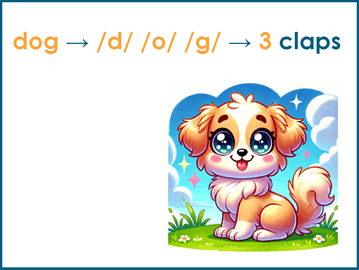
You can also:
Tap instead of clap
Use blocks or small objects to represent each sound
This activity develops phonemic awareness, which is the ability to hear and identify individual sounds in words—a critical skill for early reading.
Read and spot the sound
While reading a book together, choose a focus sound or letter pattern for your child to look for.
You might ask:
“Can you find a word that starts with /ch/?”
“Do you see any words with ‘th’ in them?”
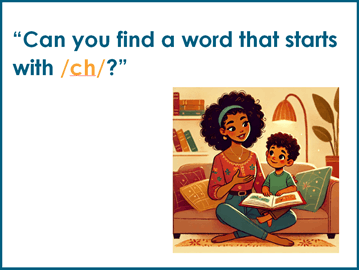
Pause occasionally to point out examples and discuss how the sound is used in different words.
This activity helps children see phonics in action and connects sound patterns to real reading experiences.
Silly sound swap
Take a simple word and change one sound at a time to create new words. Children especially enjoy making silly or nonsense words.
Examples:
cat → hat → mat → sat
dog → log → fog
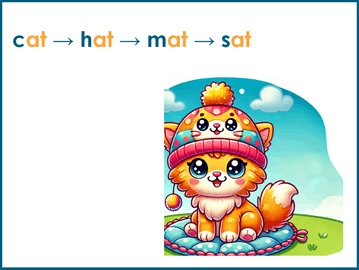
You can make it more playful by asking:
“What happens if we change the first sound?”
“Can you make a silly word?”
This activity strengthens sound manipulation skills and encourages flexible thinking about language.
Write and say
Encourage your child to write simple words while saying each sound out loud as they write.
For example:
Writing “sun” → say /s/ /u/ /n/
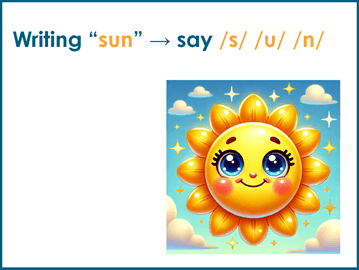
You can support your child by:
Saying the word slowly
Helping them stretch out the sounds
Praising effort rather than perfection
This activity connects reading and writing, helping children understand how sounds map to letters.
Make phonics part of everyday life
Phonics practice does not have to be a separate “lesson.” Some of the most effective learning happens naturally throughout the day.
Try incorporating phonics into everyday moments:
Reading signs while walking or driving
Noticing letters and sounds at the grocery store
Playing word games during car rides
Talking about sounds in names, foods, or places
These small, informal moments make learning feel natural and enjoyable.
Tips for parents
Supporting your child’s phonics development can be simple and rewarding. Keep these tips in mind:
Keep sessions short and engaging (5–10 minutes is enough)
Focus on making activities fun rather than perfect
Encourage your child to try, even if they make mistakes
Praise effort and progress to build confidence
Repeat activities often—practice helps skills stick
Be patient and allow your child to learn at their own pace
Final thoughts
Phonics is a powerful tool that helps children unlock the world of reading. By practicing at home in small, meaningful ways, parents can play an important role in their child’s literacy development.
With consistent support, encouragement, and a bit of creativity, everyday moments can become valuable learning opportunities. Over time, these simple activities help children grow into confident, capable readers who are ready to take on new challenges.