

When most people think about children's books, they often picture exciting adventures, funny characters, and magical worlds. Fiction certainly deserves its place on every child's bookshelf, but nonfiction is just as important. From fascinating animal facts to books about volcanoes, space, weather, history, and inventions, nonfiction introduces children to the incredible world around them.
Children are naturally curious. They ask questions from the moment they can talk.
"Why is the sky blue?"
"How do airplanes stay in the air?"
"Why do giraffes have long necks?"
"Where does rain come from?"
Nonfiction books help answer these questions while encouraging children to ask even more. They build knowledge, improve vocabulary, strengthen reading comprehension, and help children become confident learners both inside and outside the classroom.
Let's explore why every young reader should spend time reading nonfiction.
What is nonfiction?
Nonfiction is writing that teaches readers about real people, real places, real animals, real events, and real ideas.
Unlike fiction, which tells made-up stories, nonfiction is based on facts.
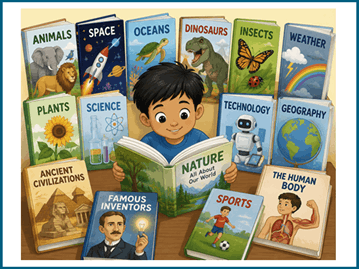
There are many kinds of nonfiction books for children, including books about:
Animals
Space
Oceans
Dinosaurs
Insects
Weather
Plants
Science
Technology
Geography
Ancient civilizations
Famous inventors
Sports
Nature
The human body
Some nonfiction books explain how things work.
Others answer interesting questions.
Some tell the true stories of remarkable people who changed the world.
Many include colourful photographs, diagrams, maps, illustrations, timelines, and labelled pictures that make learning enjoyable.
For many children, nonfiction feels like going on a treasure hunt for amazing facts.
Nonfiction helps children understand the world
Every day, children notice new things.
Why do birds migrate?
Why do leaves change colour?
How does a seed become a giant tree?
Why does the moon seem to change shape?
Nonfiction helps answer these everyday questions.
Each book gives children another piece of the puzzle that helps them understand how the world works.
The more they learn, the more connections they begin making.
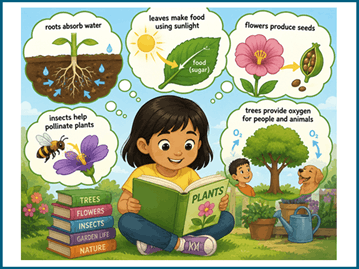
For example, after reading several books about plants, a child may discover that:
roots absorb water
leaves make food using sunlight
flowers produce seeds
insects help pollinate plants
trees provide oxygen for people and animals
Later, when they learn about forests or farming in school, these ideas won't be completely new. They'll already have knowledge to build upon.
Learning becomes much easier when children already understand some of the topic.
Knowledge builds knowledge
One of the biggest discoveries in reading research is that background knowledge matters.
Children understand new information much more easily when they already know something about the topic.
Imagine two children reading this sentence:
The astronaut floated toward the airlock before beginning the spacewalk.
Both children can sound out every word perfectly.
However:
Child A has read many books about space.
They know what astronauts do, why there is no gravity in space, and what a spacewalk is.
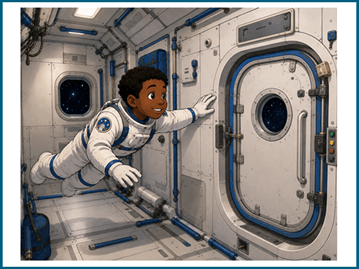
The sentence makes perfect sense.
Child B has never learned much about space.
Although they read every word correctly, they struggle to picture what is happening.
Who understands the sentence better?
Clearly, Child A.
Reading isn't only about recognising words.
It's also about understanding ideas.
The more background knowledge children have, the easier reading becomes.
This is one reason why children who regularly read nonfiction often become stronger readers over time.
Nonfiction improves reading comprehension
Many parents focus on helping children sound out difficult words.
Decoding is important, but comprehension is the real goal of reading.
Children need to understand:
what happened
why it happened
how ideas connect
what the author wants them to learn
Nonfiction stretches these thinking skills.
Instead of following one story from beginning to end, children must often:
compare ideas
remember facts
identify cause and effect
notice sequences
understand explanations
connect information across pages
For example, a book about volcanoes may explain:
how volcanoes form
why eruptions happen
different types of volcanoes
famous eruptions throughout history
how scientists monitor volcanoes today
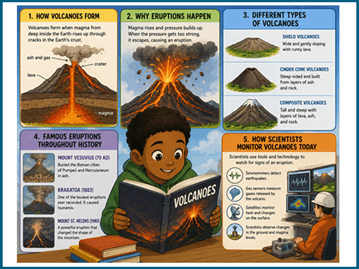
Readers must connect all these ideas together.
These comprehension skills transfer to every subject they study in school.
Nonfiction introduces rich vocabulary
Children learn thousands of new words simply by reading.
Nonfiction is especially good at introducing precise vocabulary.
A book about sharks may include words such as:
predator
gills
dorsal fin
cartilage
species
A weather book might teach:
forecast
humidity
evaporation
atmosphere
precipitation
A book about ancient Egypt could introduce the words:
pharaoh
pyramid
hieroglyphics
archaeologist
civilization
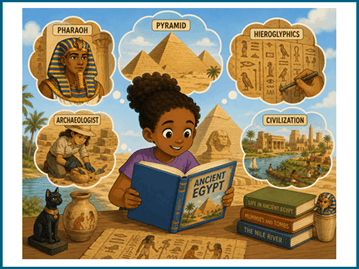
At first, these words may seem difficult.
However, because children see them alongside pictures and explanations, they quickly begin understanding them.
The more vocabulary children know, the easier future reading becomes.
Nonfiction teaches children how to read different types of text
Storybooks usually follow a familiar pattern.
There is a beginning, middle, and ending.
Nonfiction looks very different.
Children learn how to use important text features such as:
headings
subheadings
captions
photographs
diagrams
labels
maps
timelines
charts
graphs
tables
glossaries
indexes
For example, imagine a child wants to know what pandas eat.
Instead of reading the whole book from page one, they can:
Look in the table of contents.
Turn to the chapter about diet.
Read the heading.
Study the diagram.
Use the glossary if they find an unfamiliar word.
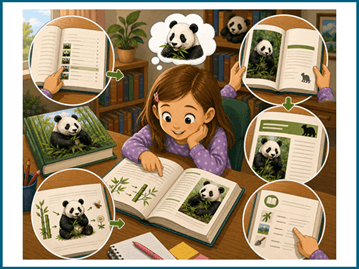
These are valuable research skills they'll continue using throughout school.
Nonfiction encourages curiosity
Curious children become lifelong learners.
One fascinating fact often leads to another question.
For example:
A child reads that octopuses have three hearts.
That leads to new questions.
Why do they need three hearts?
How intelligent are octopuses?
Can they solve puzzles?
Do they change colour?
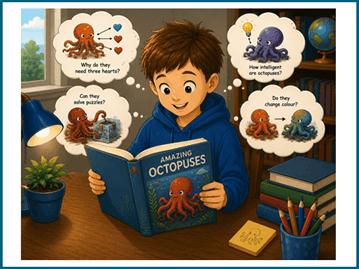
Before long, that single book has inspired hours of learning.
This natural curiosity is one of the greatest gifts nonfiction provides.
Many adults can remember exactly which childhood book first sparked their lifelong interests.
Children discover new passions
Many careers begin with childhood curiosity.
A child fascinated by dinosaurs today may become a paleontologist.
A child who loves insects might become an entomologist.
A child who enjoys books about rockets may one day become an aerospace engineer.
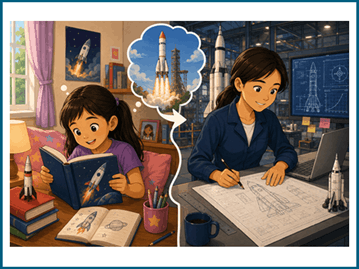
Of course, not every child will grow up to work in these fields.
But reading widely helps children discover interests they never knew they had.
One great nonfiction book can open an entirely new world.
Nonfiction supports every school subject
Reading nonfiction strengthens far more than reading lessons.
It supports learning across the entire curriculum.
Science
Children already understand concepts like habitats, weather, plants, forces, or the solar system.
Social studies
They learn about different countries, cultures, governments, and historical events.
Geography
They discover continents, mountains, rivers, climates, and ecosystems.
Health
They understand nutrition, exercise, emotions, and how the human body works.
Mathematics
Many nonfiction books introduce graphs, measurements, data, money, and problem-solving in meaningful contexts.
Because they have already encountered these ideas while reading, classroom lessons often feel much more familiar.
Nonfiction helps children think critically
Good nonfiction doesn't simply give answers.
It encourages children to think.
Readers begin asking:
Why did this happen?
What evidence supports this idea?
How do scientists know this?
What might happen next?
Is there another explanation?
For example, after reading about endangered animals, children may begin thinking about:
habitat loss
pollution
climate
conservation
protecting wildlife
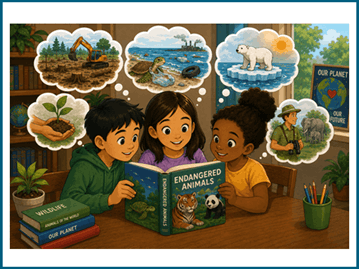
Instead of memorizing facts, they begin understanding causes and effects.
It shows that learning can be fun
Some children think learning only happens at school.
Nonfiction shows them that learning happens everywhere.
A trip to the aquarium becomes more exciting after reading about sea turtles.
A camping trip becomes more interesting after learning to identify birds.
Even watching ants in the backyard becomes fascinating after reading about insect colonies.
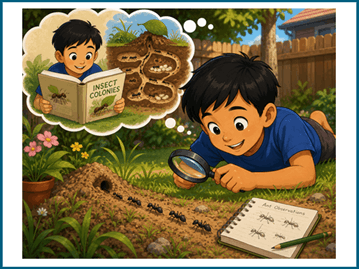
Books make everyday experiences richer.
Nonfiction can be easier for some readers
Not every child enjoys long fictional stories.
Some children prefer reading short sections packed with interesting facts.
Many nonfiction books include:
short paragraphs
photographs
fact boxes
"Did You Know?" sections
diagrams
bullet points
captions
These smaller chunks of text can feel less overwhelming for reluctant readers.
Children often enjoy reading "just one more fact."
Before they know it, they've read several pages.
Let children follow their interests
The best nonfiction book is one that matches a child's interests.
Some children love:
sharks
volcanoes
trains
insects
horses
cooking
outer space
castles
weather
Minecraft
Lego
magic tricks
When children are genuinely interested in a topic, they often read books that are much more challenging than they normally would.
Motivation makes difficult reading feel worthwhile.
Pair fiction and nonfiction together
One of the easiest ways to encourage nonfiction reading is to pair it with fiction.
For example:
After enjoying a novel about dinosaurs, explore a book explaining how fossils are discovered.
After reading a story set in the rainforest, learn about the real animals that live there.
After reading a fictional adventure on Mars, read a nonfiction book about NASA's Mars rovers.
These connections help children see how imagination and real-world knowledge work together.
Easy ways to add more nonfiction at home
You don't need to create formal lessons.
Simply make nonfiction part of everyday life.
You could:
Visit the nonfiction section of the library each week.
Read about animals before visiting the zoo.
Learn about constellations before stargazing.
Read a weather book before a storm arrives.
Explore a cookbook together before making dinner.
Read about insects before going on a nature walk.
Keep a basket of nonfiction books within easy reach.
Encourage children to ask questions and then help them find books that answer them.
The goal isn't to memorize facts.
It's to enjoy discovering new things.
Fiction and nonfiction are both essential
Sometimes people wonder which is better: fiction or nonfiction.
The truth is that children need both.
Fiction develops imagination, empathy, creativity, and an understanding of characters and stories.
Nonfiction develops knowledge, curiosity, vocabulary, critical thinking, and research skills.
Together, they help children become thoughtful, capable readers who enjoy learning about both imaginary worlds and the real one.
Final thoughts
Nonfiction does far more than teach facts. It helps children make sense of the world around them. Every book they read builds background knowledge, introduces new vocabulary, strengthens comprehension, and inspires fresh questions.
Whether a child is fascinated by whales, volcanoes, castles, robots, or outer space, there is a nonfiction book waiting to spark their curiosity. By encouraging children to read a wide variety of nonfiction alongside their favourite stories, parents and teachers help them become confident readers, enthusiastic learners, and curious thinkers who are eager to explore the world—one book at a time.