


Your child has plenty of ideas, but when it is time to write a paragraph, getting started can be the hardest part. Should the first sentence describe a small detail, introduce the subject or explain an opinion?
Learning how to write a topic sentence gives children a clear starting point. It also helps them decide which details belong in their paragraph. Here is a practical way to introduce this skill and practice it at home.
What is a topic sentence?
A topic sentence tells the reader the main idea of a paragraph. It introduces the subject and explains what the writer wants to say about it.
For example:
Our school garden gives students several ways to learn about plants.
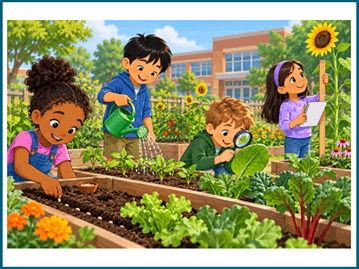
This sentence tells us both the topic: our school garden, and the main idea: how it helps students learn about plants. The sentences that follow could describe planting seeds, observing growth and learning what plants need.
For children learning to write paragraphs, placing the topic sentence first makes the structure easier to follow. Topic sentences can appear elsewhere, but starting with the main idea is a useful approach for beginners.
Start with a topic your child knows
Choose something familiar, such as a pet, a favorite activity, a school experience or an animal your child has learned about.
A topic is usually a word or short phrase:
- Our library
- Riding a bike
- Penguins
- My favorite board game
A topic sentence is a complete sentence that says something about that topic.
Topic: Our library
Topic sentence: Our library is a useful place to find books about animals and their habitats.

If your child writes only “Our library,” ask, “What do you want the reader to know about it?” This question helps turn a subject into a main idea.
How to write a topic sentence in three steps
1. Choose one main idea
A paragraph needs a clear focus. A broad topic such as “animals” can lead a child in too many directions. Narrow it to something they can explain in a short paragraph.
For example:
Broad topic: Animals
Narrower topic: Penguins
Main idea: Penguins have special body parts that help them stay warm in cold places.

Your child does not need to explain everything they know about penguins. They only need details that support this particular idea.
2. Think of a few supporting details
Before writing the topic sentence, ask your child to name two or three facts, reasons or examples they could include.
For a paragraph about why they enjoy a board game, the details might be:
- The rules are easy to learn.
- The game makes everyone laugh.
- Each round is different.
Ask, “What idea connects all of these details?”
One possible topic sentence is:
This board game is a fun choice for family game night.
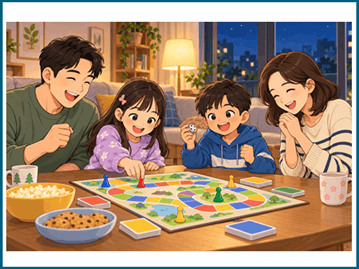
Brainstorming details first can be especially helpful for children who struggle to write an opening sentence.
3. Write a complete sentence that connects the ideas
A useful starting pattern is:
Topic + what you want to say about it
For example:
Riding a bike + is a fun way to get exercise.
Together, these become:
Riding a bike is a fun way to get exercise.
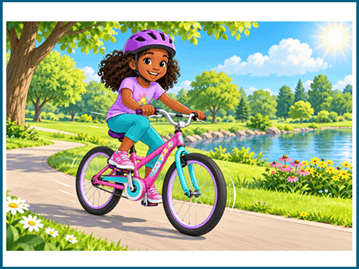
Read the sentence aloud. Does it make sense by itself? Does it give the reader a clear idea of what will follow? Could your child add a few related details?
A strong topic sentence does not need long words. It needs a clear idea.
Topic sentence examples for kids
Here are several examples your child can use to see the connection between a main idea and supporting details.
A school garden
Topic sentence: Our school garden helps us learn how plants grow.
Details that could follow: Planting seeds, watering plants and observing changes.
A rainy day
Topic sentence: There are plenty of fun things to do indoors on a rainy day.
Details that could follow: Playing games, making crafts and reading.
A library
Topic sentence: The library offers more than books to borrow.
Details that could follow: Story times, computers and reading clubs.
Helping at home
Topic sentence: Children can help at home in many ways.
Details that could follow: Setting the table, watering plants and putting toys away.
A favorite season
Topic sentence: Autumn is my favorite season for outdoor activities.
Details that could follow: Walking through colorful leaves, visiting a pumpkin patch and playing outside.
Notice that each sentence leaves room for explanation. It introduces the idea without including every detail.
Improve topic sentences that are too vague or too narrow
Children sometimes write a sentence that introduces a subject but gives little direction.
Too vague: Dogs are nice.
Clearer: Dogs can be wonderful companions for people.

The clearer sentence gives the paragraph a focus. Your child could explain how dogs offer company, play with their owners or join them on walks.
Other children begin with a detail that is too small to cover the whole paragraph.
Too narrow: My dog has a red collar.
Better for a paragraph about care: Taking care of my dog involves several daily jobs.
A red collar could be useful in a paragraph describing a dog's appearance. But it would not introduce a paragraph about feeding, walking and grooming the dog. Whether a topic sentence works depends on the details that follow it.
Another common beginning is:
I am going to tell you about the library.
This names the subject, but it does not explain the main idea. Encourage your child to say something more specific:
The library is a great place to discover new interests.
Show how a topic sentence works in a paragraph
Read this short paragraph together:
Helping in the kitchen gives children a chance to practice useful skills. Measuring ingredients lets them work with numbers. Reading a recipe helps them follow written directions. Preparing food also teaches them to take turns and work together. Cooking can turn an everyday task into a learning experience.
Ask your child:
- What is the main idea?
- Which sentence introduces it?
- How does each detail explain that idea?
Now add this sentence:
My favorite shoes are blue.
Does it belong? It does not explain how helping in the kitchen builds useful skills. This simple exercise shows how a topic sentence helps a writer keep a paragraph focused.
For help with the rest of the paragraph, explore our guide to organizing thoughts into a coherent paragraph.
Try a “find the connection” activity
Give your child these three details:
- We can borrow stories about different places.
- We can find books that answer our questions.
- We can discover authors we have never read before.
Ask them to write a topic sentence that connects all three.
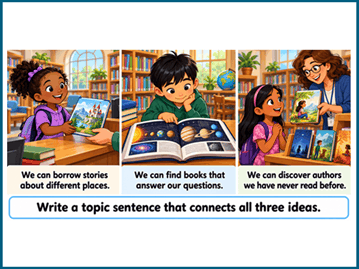
One possible answer is:
Visiting the library helps us discover new books and ideas.
There can be more than one good answer. The important question is whether the sentence introduces an idea that all the details support.
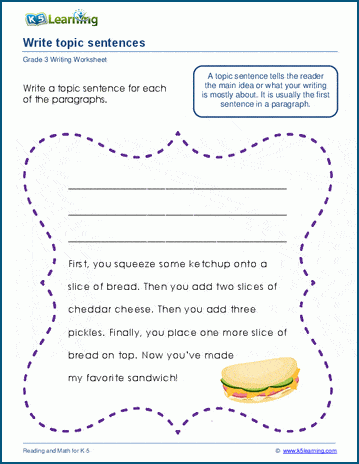
K5 Learning's Grade 3 topic sentence worksheets offer practice with this approach: students read short texts and write a topic sentence for each.
Use sentence starters when your child needs help
A sentence starter can make the task feel more manageable:
- One activity I enjoy is…
- There are several ways to…
- _____ is important because…
- My favorite _____ is _____ because…
- _____ helps us…
- _____ has several interesting features.
For example:
There are several ways to save water at home.
Your child could follow this with details about turning off taps, taking shorter showers and using only the water they need.
Treat sentence starters as temporary support. As your child becomes more confident, encourage them to write openings in their own words.
Build from the topic sentence to supporting details
Once your child can write a clear main idea, ask them to add two or three sentences that explain it.
Start with:
Our neighborhood park is a good place to spend an afternoon.
Then ask, “What makes it a good place?”
Your child might describe the playground, walking paths and open space for games.
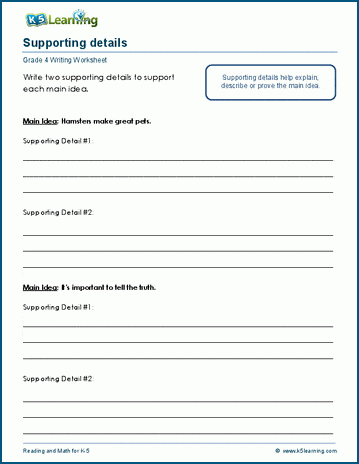
K5 Learning's Grade 4 supporting details worksheets help children make this connection. The exercises include practice with a given topic sentence and with a topic sentence students write themselves.
Keep the challenge manageable. A Grade 3 learner might begin with a familiar subject and a sentence frame. A more confident Grade 4 or 5 writer can try narrowing a broad topic, writing two possible openings and choosing the one that best matches the paragraph.
A quick topic sentence checklist
Before moving on, have your child check:
- Have I written a complete sentence?
- Does it introduce the topic?
- Does it explain the main idea?
- Can I add a few details that support it?
- Will all the details in my paragraph connect to this idea?
If the answer to one question is no, revise the sentence together. Often, changing a few words is enough.
Keep practice short and focused
Your child does not need to write a full paragraph every time they practice topic sentences. Try choosing one familiar topic and writing an opening sentence, or reading a few details and deciding what connects them.
Once that feels comfortable, add supporting sentences. A clear topic sentence gives children a main idea to build on, and makes it easier for readers to follow their writing.