


Grammar can sometimes feel like a long list of rules. As children learn to read and write, they often pick up ideas that aren't quite true. Some come from oversimplified lessons, while others come from hearing language used in everyday conversation.
Let's look at some common grammar myths and discover what's really true.
Myth 1: Every sentence has to be long
Truth: Short sentences can be powerful.
Many young writers think longer sentences sound smarter. Good writers use a mix of short and long sentences.
For example:
The storm arrived. Everyone ran inside.
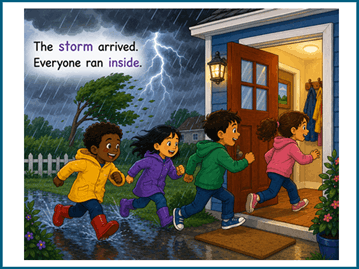
These short sentences create excitement and are easy to read.
Myth 2: Bigger words always make writing better
Truth: Clear words are usually the best choice.
Good writing isn't about using the biggest vocabulary. It's about helping your reader understand your ideas.
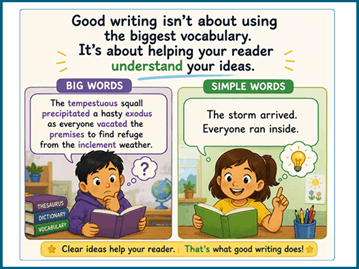
Instead of choosing a difficult word just because it sounds impressive, choose the word that fits best.
Myth 3: You should never start a sentence with "And" or "But"
Truth: You can.
Many people hear this rule, but it's actually a myth.
Professional authors often begin sentences with And or But to make their writing sound natural or to emphasize an idea.
For example:
We searched everywhere. But the puppy was already asleep under the bed.
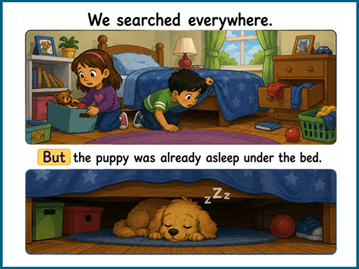
Like any writing tool, it shouldn't be overused, but it is perfectly acceptable.
Myth 4: Every sentence has to sound the same
Truth: Different sentence types make writing interesting.
Imagine reading a story where every sentence was exactly the same length.
It would quickly become boring.
Good writers mix:
short sentences
longer sentences
questions
exclamations
simple, compound, and complex sentences
This variety keeps readers engaged.
Myth 5: Pronouns can’t replace every noun
Truth: Sometimes repeating the noun makes writing clearer.
Look at this sentence:
Mia told Ava that she had won the contest.
Who won?
Mia?
Ava?
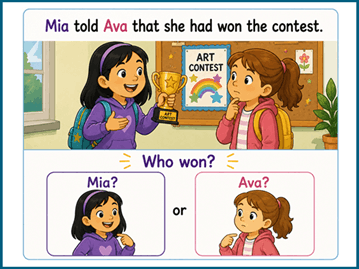
Repeating the name can make the sentence much easier to understand.
Myth 6: Every comma means "take a breath"
Truth: Commas help organize ideas.
People sometimes say commas show where to breathe, but that's only partly true.
Commas help readers understand how words and ideas fit together.
For example:
Let's eat, Grandma!
is very different from
Let's eat Grandma!
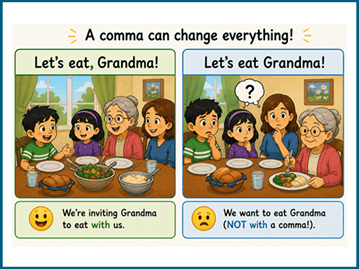
One comma makes a huge difference.
Myth 7: Grammar is only for English class
Truth: Grammar helps in every subject.
Whether children are writing about science, history, or math, grammar helps them explain their thinking clearly.
Good grammar makes writing easier for everyone to understand.
Myth 8: Good writers never make grammar mistakes
Truth: Every writer edits.
Even professional authors, journalists, and teachers revise their work.
They reread their writing, fix mistakes, and make sentences clearer before sharing them.
Writing is a process. It’s not something that's perfect the first time.
Myth 9: Grammar is just about following rules
Truth: Grammar helps us communicate.
Grammar isn't about making writing sound fancy.
It's about helping readers understand exactly what we mean.
When grammar is used well, readers can focus on the ideas instead of trying to figure out the sentences.
Helping children become confident writers
Children don't need to memorize dozens of grammar rules all at once. They become better writers by reading, writing, and noticing how language works.
Parents can help by asking simple questions like:
Does this sentence make sense?
Who does this pronoun refer to?
Would adding a comma make this easier to read?
Can you say this more clearly?
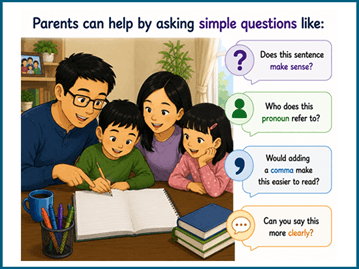
These conversations help children think about grammar as a tool for communication rather than a list of rules to memorize.
The bottom line
When children understand why grammar matters, they become more confident readers and writers. They learn that good grammar isn't about sounding smarter; it's about making their writing clear, interesting, and easy for others to enjoy reading.