

Grade 3 is a big milestone in math. This is the year most students are formally introduced to multiplication. Instead of just adding numbers one by one, kids begin learning smarter, faster ways to count and solve problems.
Here’s a clear, parent- and teacher-friendly look at what multiplication typically includes in Grade 3.
Understanding what multiplication means
Before memorizing facts, students focus on conceptual understanding. They learn that multiplication is:
Repeated addition
(3 + 3 + 3 + 3 = 12 → 4 × 3 = 12)
Equal groups
(4 groups of 3 objects)
Arrays
(rows and columns, like 4 rows of 3)
This helps kids understand why multiplication works, not just how to calculate it.
Learning multiplication vocabulary
Grade 3 students are introduced to new math language, including:
Multiply
Times
Product
Equal groups
Array
They practice reading and writing equations like:
5 × 2 = 10
“Five times two equals ten.”
Mastering basic multiplication facts
A major focus in Grade 3 is building fluency with multiplication facts, usually up to:
10 × 10 (and sometimes 12 × 12)
Teachers use lots of strategies to help facts stick:
Skip counting
Songs and rhymes
Games and timed practice
Visual models instead of memorization alone
The goal is confidence and accuracy, not speed at all costs.
Using arrays and visual models
Arrays play a big role in Grade 3 multiplication. Students might:
Draw dots in rows and columns
Build arrays with counters or blocks
Match arrays to equations
For example:
3 rows of 4 dots = 3 × 4
This also introduces the idea that 3 × 4 = 4 × 3
Understanding the commutative property
Kids learn that the order of factors doesn’t change the product:
2 × 6 = 12
6 × 2 = 12
This concept (called the commutative property) helps students learn facts more efficiently.
Solving word problems with multiplication
Grade 3 students begin solving real-world word problems, such as:
“There are 4 bags with 6 apples in each bag. How many apples are there?”
“Each table has 5 chairs. How many chairs are there at 7 tables?”
They learn to:
Identify key information
Choose multiplication as the operation
Explain their thinking with pictures or words
Connecting multiplication to division
Toward the end of Grade 3, students often begin to see how multiplication and division are related:
If 4 × 5 = 20
Then 20 ÷ 5 = 4
This prepares them for deeper division work in later grades.
Why multiplication matters so much in grade 3
Multiplication becomes a foundation skill for:
Division
Fractions
Area and geometry
Multi-step word problems in upper grades
A strong understanding now makes future math much easier and less stressful.
How parents can help at home
You don’t need worksheets every night. Simple ways to support learning include:
Practicing skip counting during car rides
Using everyday examples (rows of cookies, packs of pencils)
Playing multiplication games or apps
Encouraging explanations: “How did you figure that out?”
Grade 3 multiplication worksheets
For practice, we have created an entire section on multiplication at the grade 3 level.
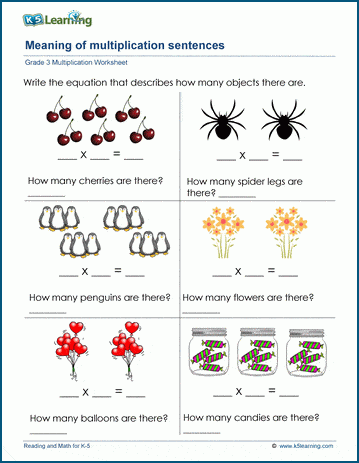
Meaning of multiplication sentences
Students use pictures of objects to work out multiplication problems in these worksheets.
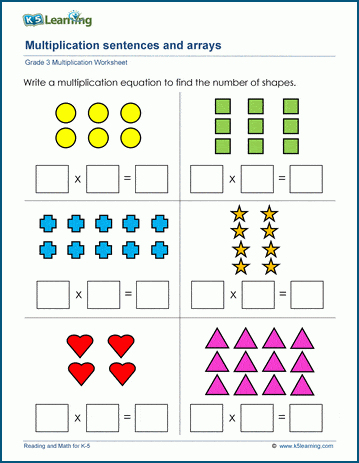
Multiplication sentences and arrays
Students use arrays to work out multiplication problems.
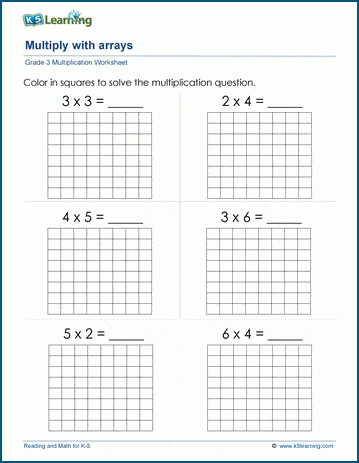
Multiply with arrays
Students are asked to fill in multiplication arrays in grids in these worksheets.
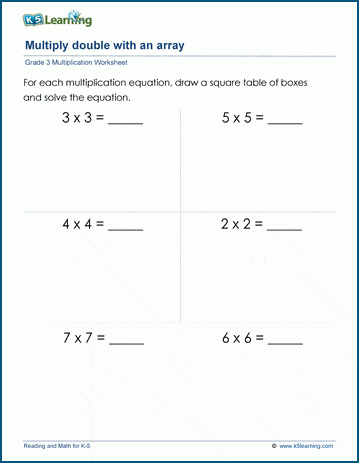
Draw and multiply arrays
Students practice drawing array boxes to solve multiplication problems.
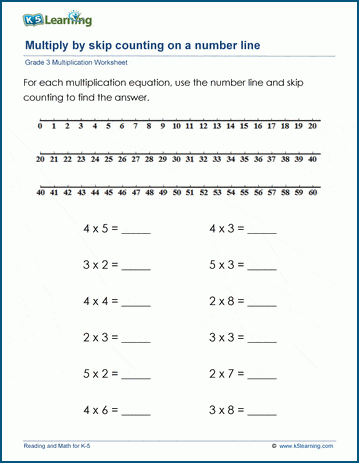
Multiply using a number line
Next, students move onto using number lines to solve multiplication problems.
Multiplication facts
The next set of worksheets have students practice multiplication facts.
Multiplication tables of 2 and 3
These worksheets cover the multiplication tables of 2 and 3.
Multiplication tables of 5 and 10
Students practice multiplying by 5 and 10 in these worksheets.

Multiplication tables of 4 and 6
These worksheets cover the times tables of 4 and 6.
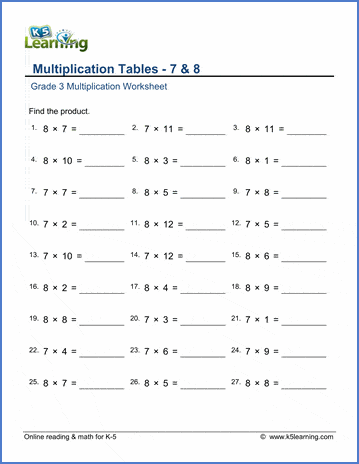
Multiplication tables of 7 and 8
In these worksheets, students practice the 7 and 8 times tables.
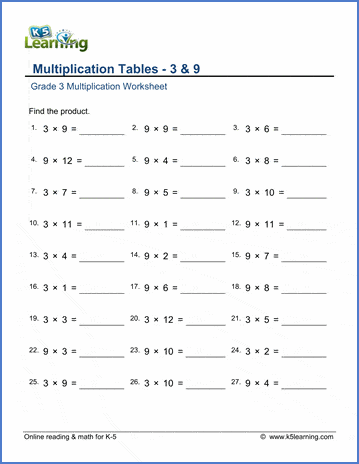
Multiplication tables of 3 and 9
Students practice multiplying by 3 and 9 in these worksheets.
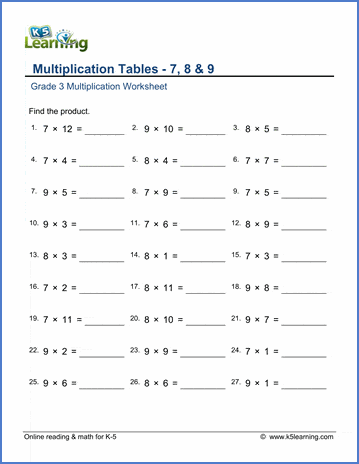
Multiplication tables of 7, 8, and 9
The final set of times tables worksheets cover multiplying by 7, 8 and 9.
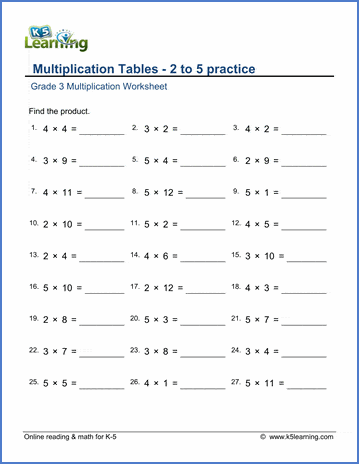
Tables 2-5 practice
The next sets of worksheets have students practice mixed times tables. This first set covers the times tables 2 to 5.
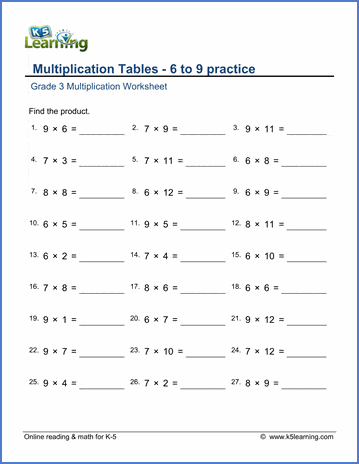
Tables 6-9 practice
These worksheets cover multiplying by 6, 7, 8 and 9.
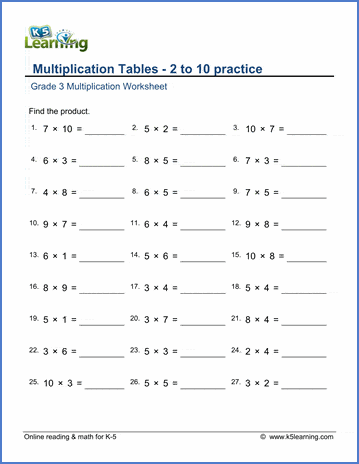
Tables 2-10 practice
This next set of worksheets covers a wider range of times tables from 2 – 10.
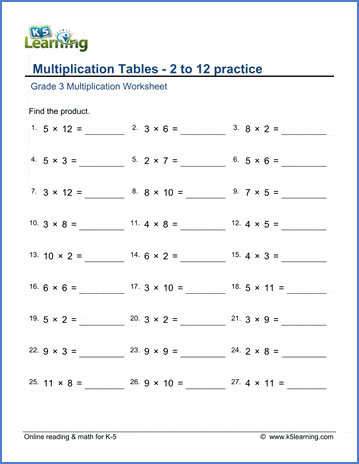
Tables 2-12 practice
In these worksheets students get a mixed practice of the times tables 2 – 12.
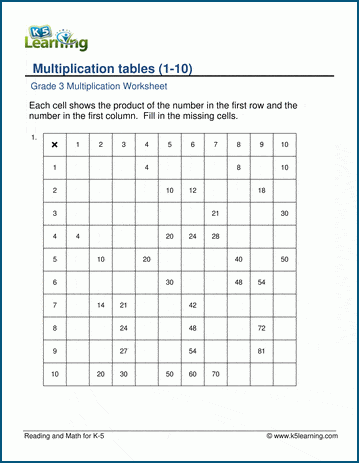
Tables practice
Students fill in the missing cells in these multiplication facts grids.
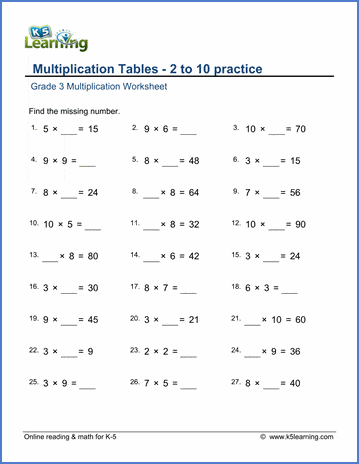
Multiplication tables 2-10, missing factor
These worksheets cover missing numbers in multiplication problems.
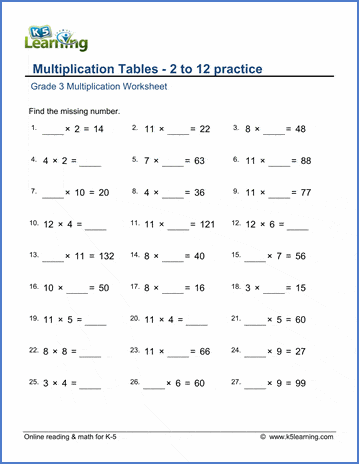
Multiplication tables 2-12, missing factor
These missing factor worksheets cover the times tables 2 – 12.
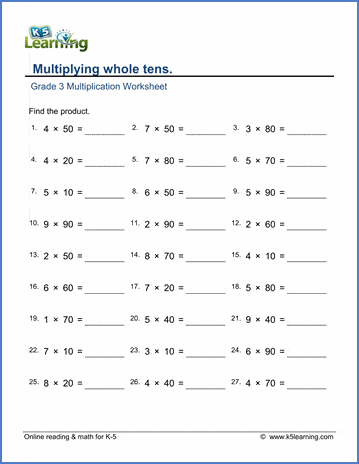
Multiply 1-digit by whole tens
These worksheets as students to multiply 1-digit numbers by whole tens.
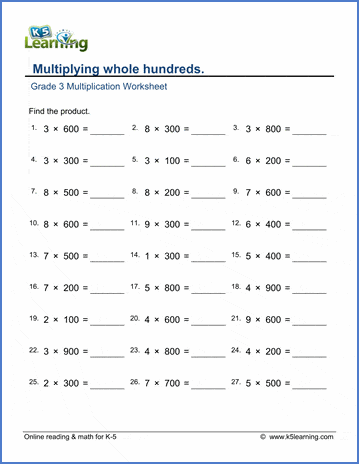
Multiply 1-digit by whole hundreds
Next, students tackle multiplying single digits by whole hundreds.
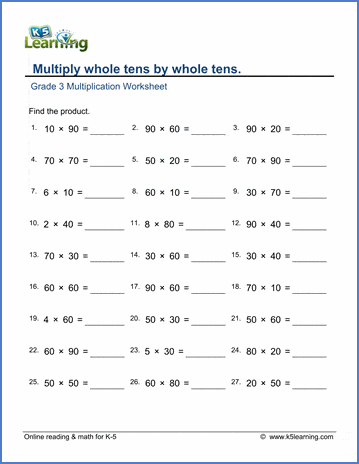
Multiply whole tens by whole tens
These worksheets cover multiplying whole tens by whole tens.
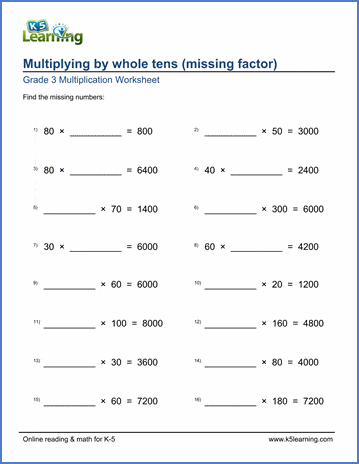
Multiply whole tens, missing factor
Students fill in the missing whole tens in these multiplication problem worksheets.
Multiply in columns
Next students work on multiplication in columns.
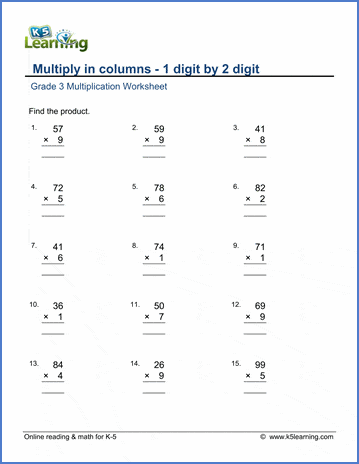
2-digit by 1-digit
Students multiply 1-digit by 2-digit numbers in columns in these worksheets.
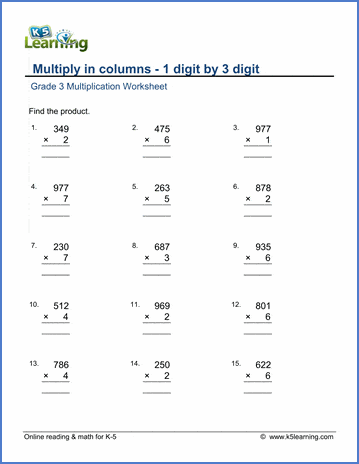
3-digit by 1-digit
Next, they multiply 1-digit by 3-digit numbers in columns.
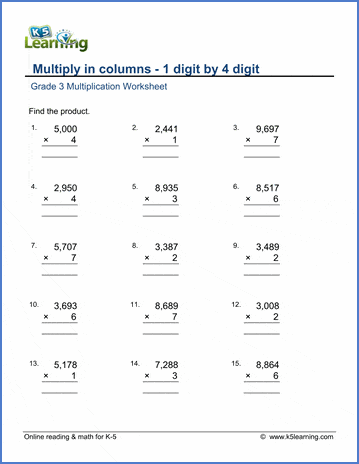
4-digit by 1-digit
The final set of worksheets have students multiplying 1-digit by 4-digit numbers in columns.
Grade 3 multiplication word problems
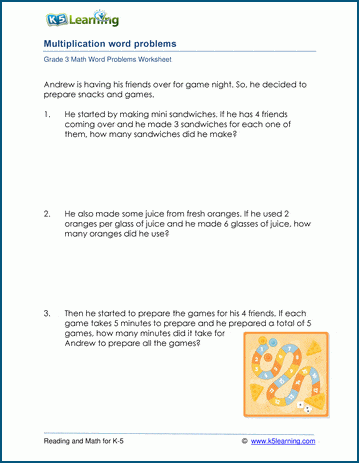
These word problem worksheets have students solve simple multiplication problems.