
 Halloween W'sheets!

When students begin learning addition, subtraction, multiplication, and division, it’s important that they understand how operations are connected, not just memorized separately. One of the best tools for teaching this idea is the fact family triangle. It’s a visual way for kids to see relationships between numbers and build fluency.
What is a fact family triangle?
A fact family triangle shows three numbers that are related to each other through a set of four math facts. Students place one number at each corner of the triangle. Using those numbers, they write equations that belong in the same “family.”
For example:
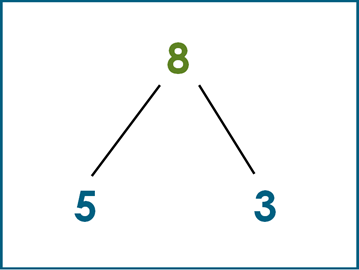
The numbers 3, 5, and 8 belong together because:
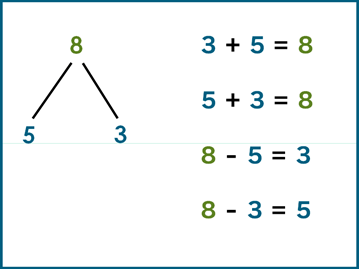
Same numbers, four different equations.
Fact families for multiplication and division
Fact family triangles also help students understand how multiplication and division are related.
For example:
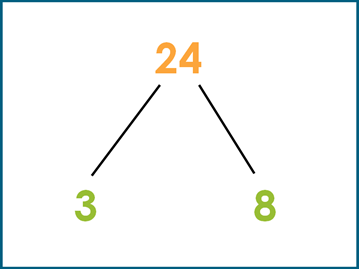
From these numbers, students can write:

Learning these connections helps students solve division problems by thinking about known multiplication facts. It makes memorization much easier.
Why fact family triangles matter
Skill developed: Why it helps students
Number relationships: Builds true understanding, not memorization.
Operation connections: Shows how addition/subtraction and multiplication/division are linked.
Stronger fact fluency: Makes math faster and more confident.
Better problem-solving: Kids can use known facts to find unknown ones.
Students begin to understand that math is connected rather than a collection of separate rules.
Fun ways to practice fact family triangles
Here are some engaging classroom or at-home activities:
Activity: How It works
Triangle card flip: Students flip a card with 3 numbers and race to write the four facts.
Build with objects: Use blocks to make arrays, then record the matching fact family.
Missing number challenge: Give triangles with one blank corner and have students solve it.
Math center station: Students rotate through creating triangles, writing facts, checking with partners.
Whiteboard speed round: 60-second team challenge to see who can complete the most families.