
 Halloween W'sheets!

Close reading is an instructional approach that teaches students to interact deeply with a short, meaningful text. Instead of reading quickly for surface understanding, students slow down, reread with intention, and analyze the author’s words carefully. In elementary school (especially grades 2 through 5) close reading helps students transition from “learning to read” to “reading to learn.”
When implemented thoughtfully, close reading strengthens comprehension, academic vocabulary, reasoning skills, and students’ ability to support their ideas with clear evidence.
What close reading really means
Close reading is not simply rereading a passage several times. It is a purposeful, structured process in which each reading has a different focus.
Students might:
Read once to understand the general meaning.
Read again to notice key details and vocabulary.
Read a third time to analyze deeper meaning, author’s craft, or theme.
Importantly, close reading relies on text-dependent questions. Students are expected to return to the text and locate evidence rather than rely on background knowledge or personal opinion alone.
This approach supports the language comprehension strands identified in Scarborough’s Reading Rope, particularly vocabulary, background knowledge, and verbal reasoning.
Why close reading is important in grades 2–5
In early primary grades, students focus heavily on decoding and fluency. By Grade 2 and especially Grade 3, instructional emphasis begins shifting toward deeper comprehension.
Close reading helps students:
Develop stamina with complex text
Strengthen academic vocabulary
Recognize text structures
Make logical inferences
Analyze character motivation
Identify central ideas and themes
Support claims with evidence
These skills become essential as academic texts grow more demanding in upper elementary.
How to structure a close reading lesson
Close reading works best with short, complex passages, typically one page or fewer for elementary students. The goal is depth, not volume.
First reading: build basic understanding
During the first read, the focus is on literal comprehension.
Students should be able to answer:
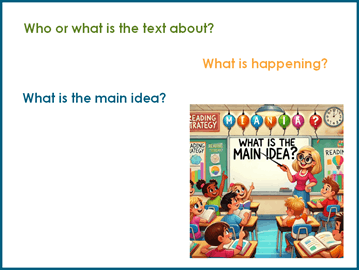
Who or what is the text about?
What is happening?
What is the main idea?
Teachers may:
Clarify unfamiliar vocabulary briefly
Check for basic understanding
Encourage students to mark confusing sections
The purpose is not deep analysis, yet it is building a solid foundation.
Second reading: examine the details
The second read shifts attention to how the text works.
Students might:
Highlight repeated words or phrases
Circle signal words
Identify important details
Notice descriptive language
Questions might include:
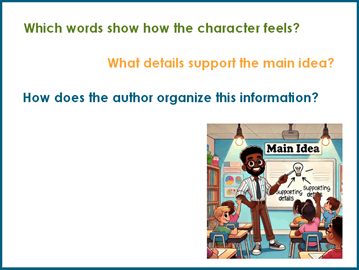
Which words show how the character feels?
What details support the main idea?
How does the author organize this information?
At this stage, students begin citing specific lines as evidence.
Third reading: analyze and infer
The third reading focuses on deeper meaning.
Students may explore:
Author’s purpose
Theme or lesson
Character motivation
Inference and reasoning
Questions could include:
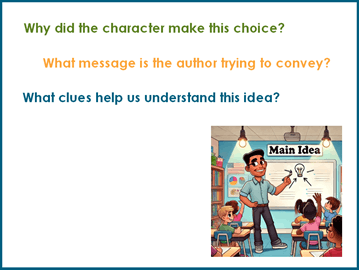
Why did the character make this choice?
What message is the author trying to convey?
What clues help us understand this idea?
Students must support answers directly from the text.
What texts work best?
Not all texts are suited for close reading.
Choose passages that:
Are short and manageable
Contain rich vocabulary
Include layered meaning
Reward rereading
Nonfiction passages in science and social studies often work particularly well because they contain dense information and academic language.
Poetry is another strong choice due to figurative language and condensed meaning.
How often should close reading be used?
Close reading is a powerful instructional tool, but it should not dominate every reading experience.
Students also need:
Independent reading time
Fluency practice
Read-alouds
Writing instruction
Vocabulary study
Using close reading once or twice per week allows students to develop analytical habits without experiencing cognitive overload.
Common mistakes to avoid
Close reading can lose its effectiveness if overused or poorly structured.
Avoid:
Excessively long passages
Overwhelming students with too many questions
Asking only literal recall questions
Eliminating discussion time
If students appear fatigued or disengaged, the lesson may need to be shortened or refocused.
The long-term benefits
When students regularly practice close reading, they develop habits that extend beyond elementary school:
Slowing down when text becomes challenging
Monitoring understanding
Revisiting confusing sections
Supporting ideas with evidence
Thinking critically about author choices
These habits prepare students for upper elementary, middle school, and academic reading across all subjects.
Final thoughts
Close reading is not about making reading harder. It is about making reading intentional.
When students learn how to dig into a text (to question it, analyze it, and support their thinking) they build confidence and independence as readers.
Used thoughtfully, close reading becomes one of the most effective tools in an elementary literacy toolkit.