


Understanding your brain isn’t just interesting, it gives you an advantage. When you know why you focus well some days, lose motivation on others, or react quickly in emotional situations, you can do something about it.
This isn’t about complicated science. It’s about understanding a few key ideas that explain a lot of what you experience every day.
Your brain is still developing and that matters
Your brain is not finished developing. In fact, one of the most important areas, the prefrontal cortex, is still developing and will continue to grow into your twenties.
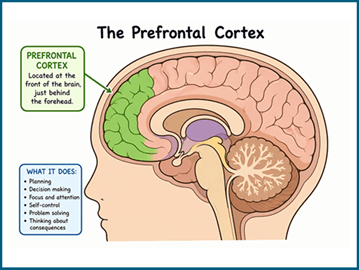
This part of the brain is responsible for:
Planning and organizing
Controlling impulses
Thinking ahead
Making balanced decisions
At the same time, another part of your brain: the amygdala, is already highly active. It processes emotions and reacts quickly, especially to stress, frustration, or excitement.
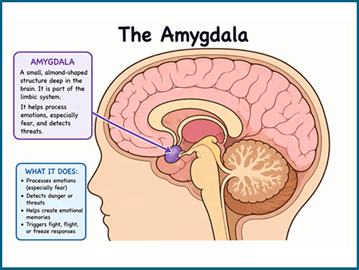
This imbalance explains something important:
you can understand what the right decision is but still act differently in the moment.
That’s not a lack of ability. It’s how your brain is wired right now.
Why emotions can override logic
Your brain is designed for speed when it comes to emotions. The amygdala reacts almost instantly, while the prefrontal cortex takes longer to process and respond.
This is useful in dangerous situations, but in everyday life it can lead to:
Overreacting
Saying something you regret
Shutting down when something feels overwhelming
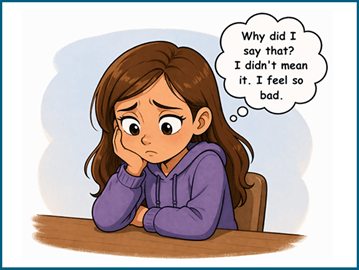
When this happens, it’s not that your thinking ability disappears. It’s that it temporarily gets “overridden.”
One of the most useful skills you can build is creating a small gap between reaction and response. Even a few seconds (pausing, breathing, or stepping back) gives your thinking brain time to engage.
Learning physically changes your brain
When you learn something new, your brain forms connections between neurons. At first, those connections are weak and slow. That’s why new material can feel confusing or difficult.
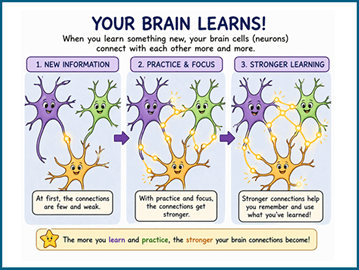
With practice, those connections become:
Faster
Stronger
More efficient
This is often described as neuroplasticity: the brain’s ability to change based on experience.
What this means in practice:
Difficulty is a normal part of learning
Repetition is necessary
Progress is often gradual, not immediate
If something feels challenging, it’s usually because your brain is still building those connections, not because you’re incapable.
Memory depends on how you learn
Your brain doesn’t store everything equally. For information to stick, a few things matter:
Attention: If you’re distracted, your brain won’t encode the information properly
Repetition over time: Reviewing material multiple times strengthens memory
Meaning: You remember things better when they make sense or connect to something you already know

This explains why:
Cramming often leads to short-term results but poor long-term retention
Actively working with information (explaining it, using it, testing yourself) is more effective than just rereading
Your brain is not designed to remember everything. It’s designed to remember what it uses.
Mistakes are part of the learning process
When you make a mistake, your brain detects a mismatch between what you expected and what actually happened. This triggers adjustments in your neural connections.
That process is essential for learning.
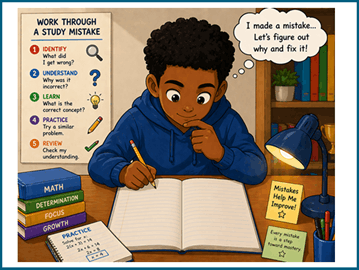
Avoiding mistakes, or stopping when something feels difficult, actually slows down progress. Engaging with errors, analyzing them, and trying again leads to stronger understanding.
In other words, mistakes are not interruptions to learning. They are part of how learning happens.
Your brain has limits and that’s normal
Your brain has a limited amount of attention and mental energy at any given time. When you overload it, performance drops.
That’s why:
Long periods of intense focus are difficult to sustain
Multitasking reduces efficiency
Breaks improve performance rather than weaken it
Movement, short pauses, and sleep all support brain function:
Breaks restore attention
Movement increases alertness
Sleep consolidates memory and learning
If your brain isn’t working well, it’s not always about effort. Sometimes it’s about capacity.
You can improve how your brain works
Even though your brain is still developing, you have a lot of influence over how well it functions.
You improve it when you:
Practice consistently
Reflect on mistakes
Manage distractions
Give yourself time to think before reacting
Take care of basic needs like sleep and exercise
These aren’t small things, but they directly affect how effectively your brain works.
Final thought
Your brain is not fixed, and it’s not finished.
If something feels difficult, inconsistent, or frustrating, that doesn’t mean there’s a problem. It usually means your brain is still developing and adapting.
Understanding that gives you an advantage:
you can stop guessing why things feel hard, and start working with your brain instead of against it.